Lawmakers pass measure to crack down on Medicaid fraud
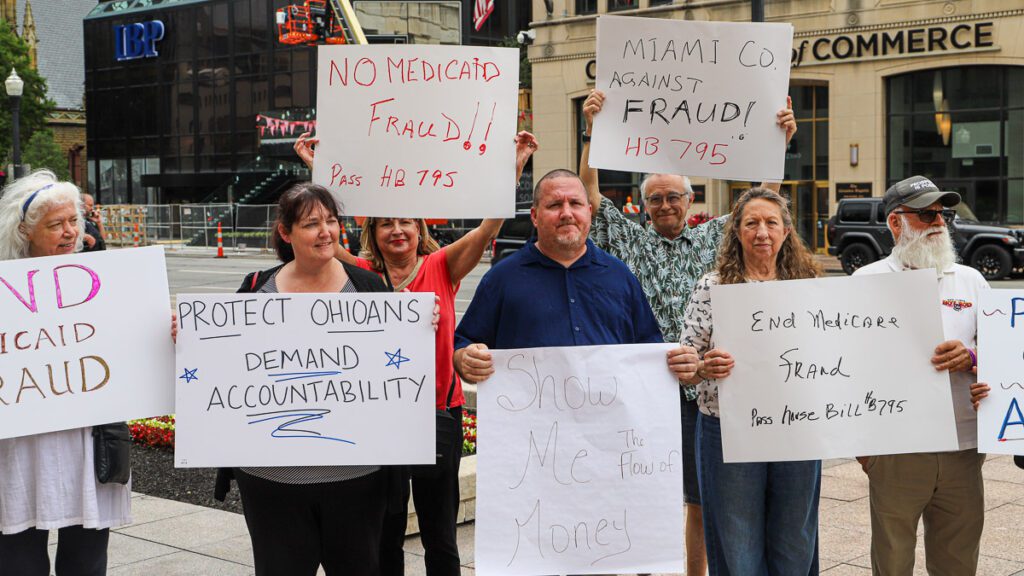
Ohioans participate in an Americans For Prosperity-Ohio rally at the Ohio Statehouse against Medicaid fraud. (Photo by Todd DeFeo)
Ohio lawmakers on Wednesday passed a measure that aims to crack down on Medicaid fraud, capping a whirlwind week.
The substitute version of Senate Bill 315 mandates annual legislative reviews of Medicaid waiver programs, expands the attorney general’s investigatory authority in Medicaid-related cases, and creates electronic visit verification dashboards and compliance tracking. It also requires automated insurance checks before Medicaid claims are paid to identify other insurers that should pay first.
Republicans have indicated this is the first of several measures they plan to consider to address concerns about Medicaid fraud. However, it is likely to be the only one lawmakers consider before the November election.
“Last night’s vote is a win for Ohio taxpayers and the vulnerable Ohioans Medicaid was designed to serve,” Americans for Prosperity-Ohio State Director Donovan O’Neil said in a statement.
“S.B. 315 strengthens accountability, improves transparency, and provides state officials with better tools to identify and stop fraud before taxpayer dollars are wasted,” O’Neil added. “Protecting the integrity of Medicaid helps ensure resources remain available for those who truly depend on the program.”
The bill began as the Cybersecurity for SNAP Act and also mandates that the state’s SNAP program move toward chip-enabled EBT cards as part of a broad approach to tackling fraud. The amended version, which now heads to Republican Gov. Mike DeWine for his consideration, includes a range of changes aimed at detecting and preventing fraud and increasing penalties for fraudsters.
Among them, it mandates that the Ohio Department of Medicaid establish criteria for classifying high-risk providers and allows the agency to impose a temporary payment suspension and conduct an investigation if there is a suspicious increase in claims. The measure also increases penalties for Medicaid fraud by allowing a first-degree felony sentence, depending on the amount of fraud committed.
“Medicaid is the largest part of our state budget, and it’s not remotely close,” state Rep. Brian Stewart, R-Ashville, said on the House floor. “It’s 50% of everything we spend.
“…For the last two months, Ohio has been a national laughing stock and punching bag over rampant fraud in our Medicaid program,” Stewart added. “When you have rampant fraud in a Medicaid program, not only is it stealing from folks who are intended to get those benefits today, but it’s eroding the public’s confidence in a program that’s half our budget.”
Stewart defended the approach that included the House Medicaid Committee considering a different measure, House Bill 795, earlier this week. As part of that measure, lawmakers initially considered a provision that would have barred caregivers from receiving Medicaid payments for caring for family members, but removed it following public feedback.
However, the Medicaid anti-fraud measures were eventually folded into Senate Bill 315, which the Senate previously approved.
“If we just looked at being the national laughing stock for two months and just said, ‘Well, let’s start out with some kind of nibbling around the edges, let’s do something small ball, let’s not go too far, let’s not really dig into the issue … then we would be doing a disservice to our taxpayers,” Stewart said. “We would be not treating the sickness with the seriousness that it deserved.
“We started out this process, and we said, ‘Let’s look at everything; let’s look at all of the concerns, all of the reporting,’” Stewart added. “…We have folks going to prison … for stealing from Medicaid recipients. We have people being indicted by the federal government as we speak. So, I’m not going to start with a small ball product. Let’s look at everything. Let’s kick the tires on everything. Let’s dig in, and we did.”
Stewart was referring to nine who were indicted last week on federal charges related to Medicaid fraud.
“At a time when many policy debates happen behind closed doors, this effort demonstrated the value of combining principled policy advocacy with citizen engagement to achieve meaningful results for Ohio taxpayers,” O’Neil said.
Related Stories
Undercover videos show Democrats have a disconnect, with some insiders saying the party takes minorities for granted
In Ohio press conference, Vance announces $42 million in SNAP fraud, including $30 million in Buckeye State