Miami Twp. could be in financial trouble as Supreme Court denies petition to review $45 million judgment
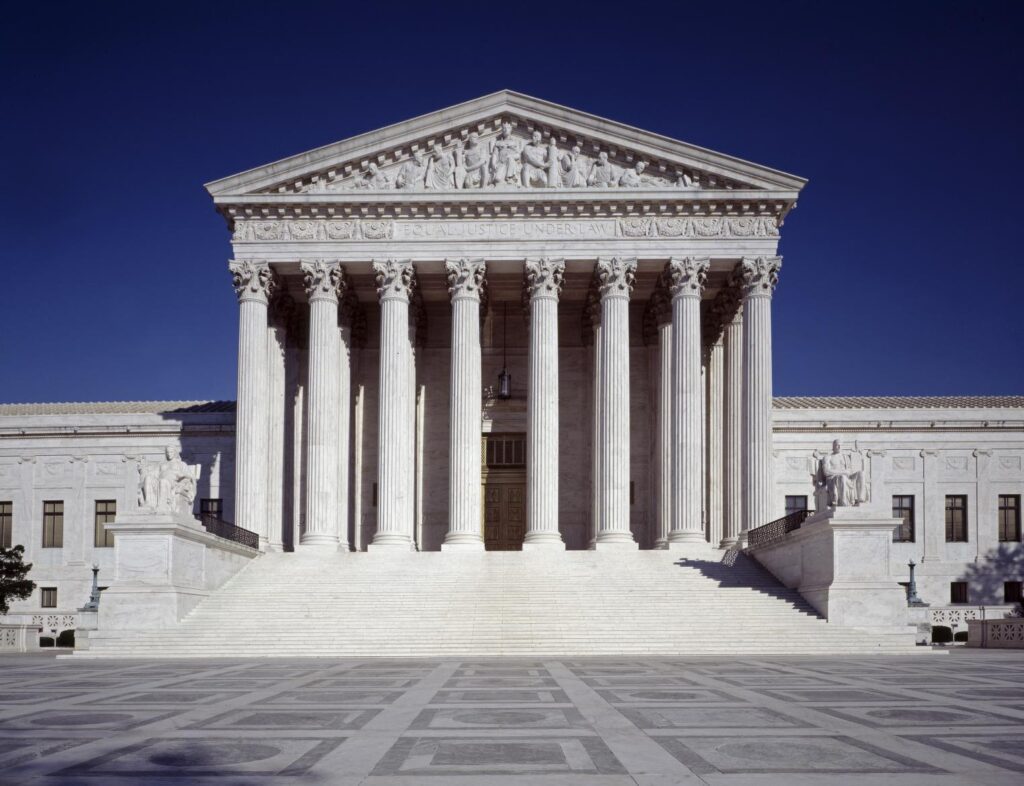
Photographs in the Carol M. Highsmith Archive, Library of Congress, Prints and Photographs Division.
The United States Supreme Court has denied a petition for review filed by Miami Twp. over a $45 million civil judgment.
Local man Roger Gillispie, who spent more than 20 years in jail, was awarded the money after a wrongful conviction lawsuit.
In a statement, the Township said it may be unable to pay the damages, the Dayton Daily News reported.
“Miami Twp. was judged by the federal courts to have no direct responsibility for the actions at issue in this case,” the statement reads. “Nevertheless, the Township is now at risk of having to hold harmless a former employee — the lone defendant found by the jury to be responsible and liable in this case — for the full amount of the judgment against him individually, a judgment far exceeding the community’s ability to pay.”
The petition also emphasized the community’s inability to pay, noting that $45 million is “greater than the Township’s discretionary budget by an order of magnitude.”
Lawyers for Gillispie also released their own statement on the ruling.
“We are grateful, but not at all surprised, that the Supreme Court has sided with Mr. Gillispie and allowed Judge Rose’s orders to stand,” David Owens and Mike Kanovitz of Loevy & Loevy said.
Gillispie was released from prison after more than 20 years when a federal judge ruled that information was withheld from his attorney in 2011, and a second court ruled that he was wrongfully imprisoned in 2017.
The case began in 1988 when two women reported being raped at gunpoint in Miami Twp. and a third woman reported a similar crime in a different county, according to court documents.
While police searched for leads, the police detective originally assigned to the case eliminated Gillispie as a suspect because he did not fit the descriptions given by the victims. After the original detective retired in 1989, a new officer identified in the documents as Matthew Moore was assigned to the case.
Moore conducted a photo line-up in 1990 that led to Gillispie’s arrest. Gillispe was convicted in a February 1991 trial, was granted a second trial, and was convicted again in June 1991.
His attorney was not informed that he had previously been eliminated as a suspect because he did not match the victims’ descriptions in the original investigation. Gillispie sued Moore for wrongful conviction in 2022, resulting in a federal jury awarding him $45 million.
Related Stories

Sherrod Brown’s 2019 comments make him sound like a liberal, not a moderate
Does liberal Rep. Ismail Mohamed live in Delaware County? Franklin County elections board dismisses challenge