NIL debate resurfaces amid Ohio lawmakers potentially blocking deals for high school, junior high athletes
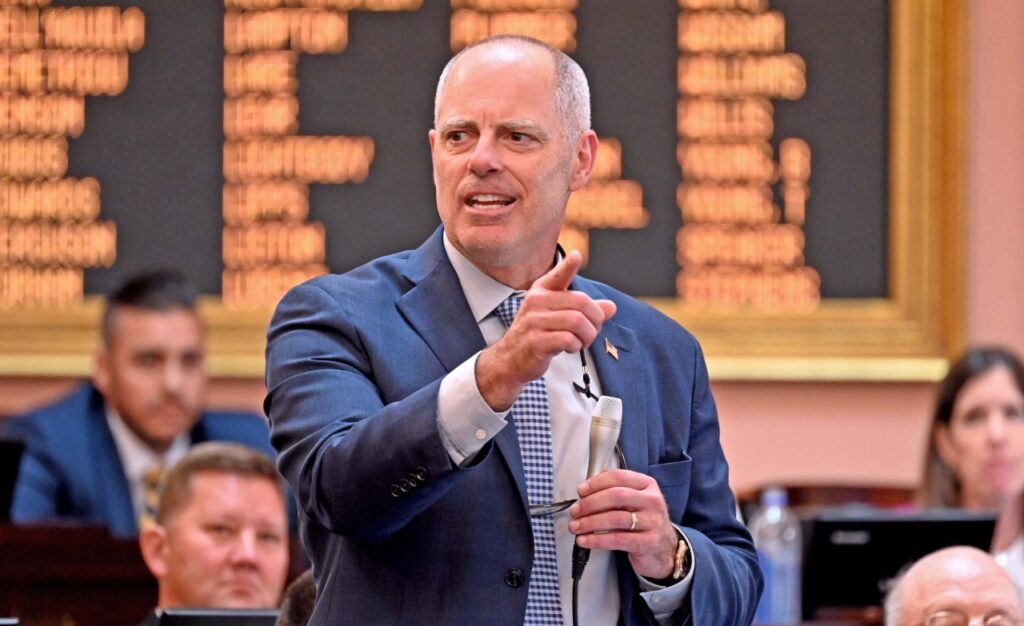
State Rep. Adam Bird, R-New Richmond, speaks on the House Floor. (Photo courtesy of the Ohio House of Representatives)
Proposed legislation would prevent middle and high school athletes in the state from earning money for their name, image, and likeness, with the lawmakers clashing with those who oppose the bill and want the student athletes to earn money this way.
House Bill 661, introduced by state Reps. Adam Bird, R-New Richmond, and Mike Odioso, R-Green Twp., would block NIL deals and any other ways of earning money that are “related to the student’s position on the roster of an interscholastic athletics team.”
According to the bill, if, for example, a student secures a football-related NIL deal, he would be prohibited from participating in the sport. However, he would be able to participate in another school sport for which he didn’t receive any money.
If the bill becomes law, it would override a November 2025 bylaw from the Ohio High School Athletic Association that allowed young athletes to earn money via NIL deals for the very first time in Ohio.
Bird and Odioso previously said that the NIL deals for middle and high school students allegedly “threaten the very nature” of school sports because the sport becomes all about earning money instead of an opportunity to exercise and bond with your teammates.
“We believe that co-curricular activities should be about learning, health, and fitness. It should be about social connection,” Bird said in a press conference in early February, according to The Dayton Daily News. “It should be about discipline, work ethic, character development, leadership, and communication skills. These are the reasons why we, as a state and as a society, invest in the opportunity for young people to participate in (school) sports.”
Bird added that Ohio taxpayers are spending money on stadiums and sports complexes so that students would exercise there rather than use them as an opportunity to “earn employment and earn an income,” according to the news source.
Odioso also said that the OHSAA’s new NIL bylaw will “cause so much damage,” adding that he doubts that the students would be able to manage sponsorship deals, The Dayton Daily News reported.
While people like Chris Steinmann, superintendent and CEO of the Cleveland Lutheran High School Association, and Scott Grant, founder of Triple Threat Leadership, supported the bill, others, including the members of the OHSAA, criticized it, according to the bill’s committee activity.
Doug Ute, OHSAA’s executive director, informed the committee that since November 2025, only 32 NIL deals have been reported among 350,000 Ohio student athletes.
“These opportunities allow students, who also happen to be athletes, to explore legitimate entrepreneurial opportunities within carefully established, education-based guardrails,” he said.
According to The Dayton Daily News, Middletown football coach Kali Jones also criticized the bill, adding that the NIL deals that are currently being offered to middle and high school students are a clear example of capitalism, which Jones supports.
“To tell a teenager or a young person who is eligible to work, who can benefit from their image in the entertainment world that they can’t benefit in the athletic world, to me, is un-American,” Jones said, according to the news source.