Ohio attorney general, law enforcement groups urge lawmakers to pass seven public-safety bills
Ohio Attorney General Andy Wilson and three statewide law enforcement organizations are urging lawmakers to pass seven public-safety bills before the General Assembly adjourns at the end of the year.
In a Nov. 10 letter to lawmakers, Wilson joined the Ohio Prosecuting Attorneys Association, Buckeye State Sheriffs’ Association and Ohio Association of Chiefs of Police in calling for legislation addressing crimes against police officers, missing persons, juvenile theft, cryptocurrency scams and sexual offenses involving children.
“These common-sense reforms will strengthen law enforcement’s ability to keep our communities safe,” Wilson said in a statement. “The bills address emerging threats, hold criminals accountable and provide greater protections for vulnerable Ohioans.”
Five of the seven bills have passed one chamber, while two remain in House committees.
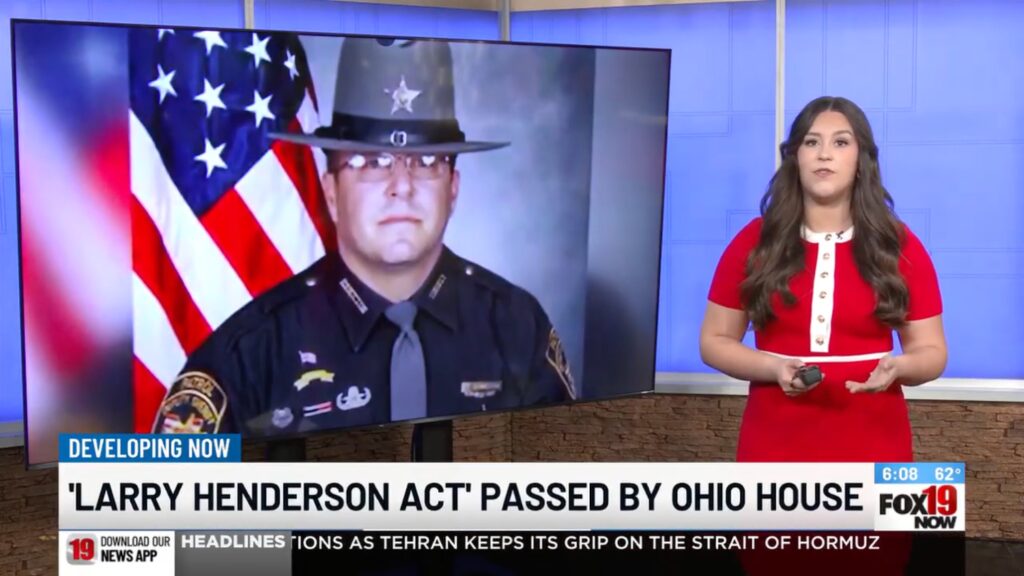
Among the measures is House Bill 372, the Larry Henderson Act, which would require adults convicted of aggravated murder involving certain law enforcement officers, first responders and military personnel to receive either the death penalty or life imprisonment without parole.
The Ohio House passed the bill 89-4 in March. It remains in the Senate Judiciary Committee, which held a third hearing on Nov. 10.
The legislation is named for Hamilton County Sheriff’s Deputy Larry Henderson Jr., who was killed in May 2025 while directing traffic during the University of Cincinnati’s spring commencement. As Ohio.News previously reported, a Hamilton County jury convicted Rodney Hinton Jr. in October of murder, two counts of reckless homicide and two counts of felonious assault in Henderson’s death.
The remaining bills address missing persons, juvenile crime, cryptocurrency scams, offender monitoring and sexual offenses involving children.
House Bill 217 would expand reporting requirements for missing persons, building on recommendations from Republican Gov. Mike DeWine’s Missing Persons Working Group. The measure passed the House in March and remains in a Senate committee.
House Bill 343 would establish mandatory dispositions for juveniles adjudicated delinquent for offenses that would constitute felony theft or vandalism if committed by adults. It remains in the House Judiciary Committee.
House Bill 648 would regulate cryptocurrency kiosks and require their operators to register as money transmitters. The bill remains in the House Financial Institutions Committee.
House Bill 667, the Reagan Tokes and Patrick Heringer Act, would strengthen GPS monitoring of offenders on supervised release, require certain warrants to be entered into the state’s law enforcement database and modify procedures involving alternatives to prison. It passed the House in June and remains in the Senate Judiciary Committee.
Two Senate bills addressing sexually oriented offenses and artificial intelligence have also passed their originating chamber.
Senate Bill 163 would establish requirements for AI-generated content and prohibit simulated child sexual abuse material, while Senate Bill 393 would modify laws governing sexual offenses involving juveniles. Both passed the Senate in May and await further action in the House.
Lou Tobin, executive director of the Ohio Prosecuting Attorneys Association, said the legislation would provide additional tools to address violent crime, protect vulnerable residents and improve supervision of offenders.
“The enactment of this slate of bills will help protect some of Ohio’s most vulnerable, including children and the elderly,” Tobin said in a release.
The organizations developed the legislative priorities during a working group convened over the summer, according to their letter.