Rep. Jamie Callender proposes moving business regulation office from governor to legislature

A Republican lawmaker has introduced legislation that would transfer control of the state’s business regulation review office from the governor to legislative leaders.
House Bill 1024, introduced by state Rep. Jamie Callender, R-Concord, would move the Common Sense Initiative to the legislative branch, giving the House speaker and Senate president authority to jointly appoint its director and oversee staffing.
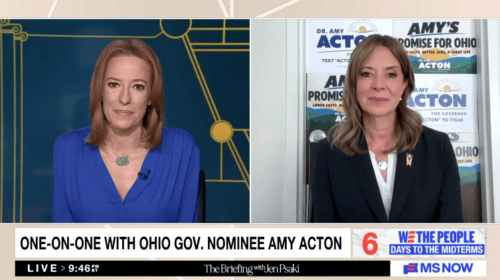
Callender introduced the bill on Oct. 13, three weeks before Democrat Amy Acton defeated Republican Vivek Ramaswamy in Ohio’s Nov. 3 gubernatorial election.
Established in 2011 under Republican Gov. John Kasich, CSI reviews state regulations affecting businesses and recommends changes intended to reduce regulatory burdens.
According to the office’s 2025 annual report, CSI reviewed 2,447 administrative rules last year and reported that 56% were improved through its review process.
The office also has authority under Ohio law to direct agencies to eliminate certain regulatory restrictions, although agencies can appeal those decisions to the Joint Committee on Agency Rule Review.
Under HB 1024, CSI would retain its regulatory responsibilities but operate under legislative leadership. The existing office within the governor’s administration would be abolished six months after the legislation takes effect, with its responsibilities and unfinished work transferred to the new office.
The legislation would also allow a majority of the Joint Committee on Agency Rule Review to extend a rule’s review period by 30 days when a committee member has unanswered questions and an agency representative has not appeared to address them.
CSI’s annual report highlighted several regulatory changes involving hospitals and pharmacies in 2025.
One involved Ohio Department of Health requirements for hospitals providing higher-level maternity and newborn care. After stakeholders raised concerns that proposed on-site medical residency requirements could jeopardize some hospitals’ certification, the department allowed hospitals to meet those requirements through agreements with other medical institutions.
Another involved proposed changes to Ohio’s prescription-monitoring system, which pharmacies warned could impose substantial compliance costs.
One interested party estimated the additional requirements could cost at least $1 million. Following discussions involving CSI and other stakeholders, the Ohio Board of Pharmacy removed some requirements and extended implementation by six months.
According to cleveland.com, Republican state Rep. Brian Stewart said House leadership had not discussed limiting Acton’s powers, while outgoing Republican Gov. Mike DeWine opposed dramatically changing the governor’s authority.
“I just don’t think that’s appropriate,” DeWine said, according to the outlet.
HB 1024 remains in the Ohio House, with no committee hearing or vote recorded since its introduction.