Ohio Consumers’ Counsel rejects Enbridge’s proposed monthly $7 fixed-charge fee increase for gas customers
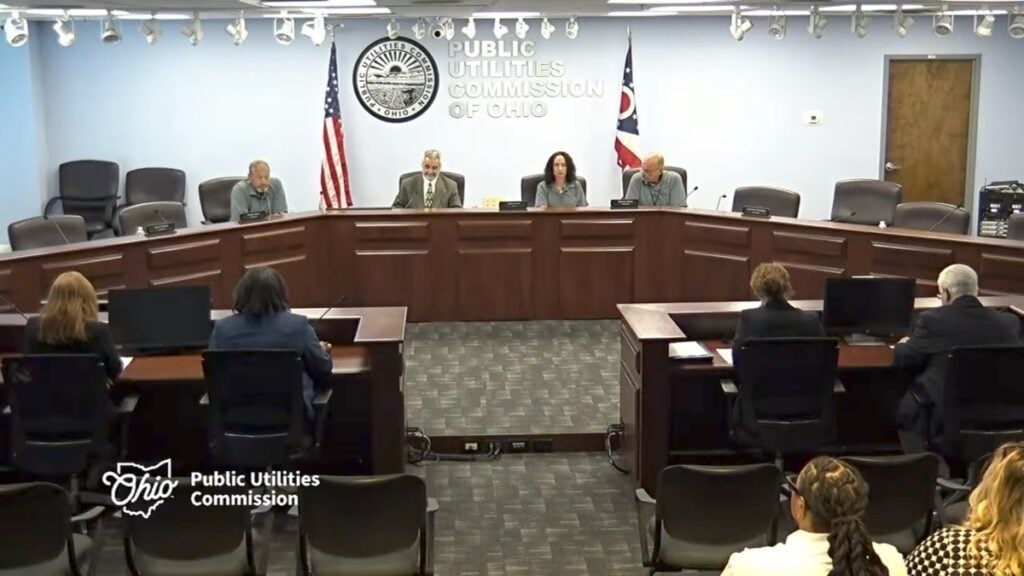
The Office of the Ohio Consumers’ Counsel continues to push back against a proposed distribution rate hike for Enbridge Gas Ohio’s residential consumers after a tentative settlement was recently announced.
Testimony filed on behalf of OCC with the Public Utilities Commission of Ohio raises concerns about affordability and the estimated $7 monthly fixed-charge fee increase on a customer’s bill.
The OCC, joined by concerned consumers and lawmakers, has urged state utility regulators to reject or substantially reduce Enbridge Gas Ohio’s proposed fee increase. The requested hike applies to natural gas charges, not usage, for consumers statewide.
“Our testimony raises serious questions about the proposed $7.03 monthly fixed-charge increase, how costs are allocated among consumers, and whether millions of dollars should be removed from the amount consumers are being asked to pay,” Ohio Consumers’ Counsel Maureen Willis said in a release.
Enbridge, PUCO Staff and other parties reached a settlement in September, which the OCC also opposes. Next, PUCO commissioners will review the settlement and OCC’s objections and issue a ruling.
According to OCC’s witnesses, the proposed settlement harms residential consumers and is inconsistent with important regulatory principles.
“A settlement should not be a shortcut around the evidence,” Willis said. “Enbridge consumers deserve rates that are affordable, transparent, and based on costs they should reasonably be required to pay.”
Enbridge Gas Ohio filed a rate increase proposal with PUCO on Dec. 31, 2025, seeking about $163 million in additional annual revenue. Initially, the company said the average residential customer’s monthly bill could increase by an estimated $7.60 to $9.50.
The Public Utilities Commission of Ohio regulates essential utility and transportation services and reviews and approves delivery costs to ensure utility companies charge fair and reasonable rates. Local hearings were held in Akron, Cleveland and Lima in August, where numerous customers and local lawmakers urged PUCO to reject the hike, according to updates on the OCC’s website.
A public hearing in Lima, Ohio, drew councilmembers, school administrators and residents who spoke out against the proposed hike, LimaOhio.com reported.
“We’re already facing house increases, water increases, insurance increases, the increase of food — all of these things adding up to 8%, which is really too much,” Jamie Dixon, the president of Lima City Council, testified at the meeting, according to the report.
PUCO administrative law judges said a public utility can recover its operating expenses with a “reasonable return on its infrastructure investments” in its distribution rates.
Enbridge spokesperson Stephanie Moore cited operational increases as reasoning for the request, along with replacing aging infrastructure and projects to bring “additional gas capacity to the market,” LimaOhio.com reported.
The OCC got involved to advocate for the state’s utility customers, arguing the added fee must be paid each month, cannot be reduced by conserving energy and adversely impacts customers who use little or no gas.
OCC Regulatory Analyst Andrew Tinkham testified the latest proposal would increase residential bills by approximately $7.03 per month, regardless of how much natural gas a consumer uses.
Tinkham raised concerns about the timing, noting many Enbridge consumers already face high energy burdens and that disconnection notices are trending upward.
“Affordability is a central issue in utility ratemaking because utility service is a basic need,” Tinkham said during his testimony.
Tinkham also recommends that Enbridge shareholders provide $1.2 million annually to the company’s Heat Care bill-payment assistance program, rather than the $500,000 annual shareholder contribution included in the settlement.
State Rep. Sean Patrick Brennan, D-Parma, also submitted public testimony to PUCO opposing the increase, saying that he is concerned that higher fixed charges would place an unfair burden on Ohio families, seniors and low-income consumers. Brennan said regulated utilities have an obligation to serve Ohio residents, and the PUCO has an obligation to protect those consumers.
“When a family turns down the thermostat, improves energy efficiency or simply uses less gas, they should have the ability to lower their bill,” Brennan said. “Increasing fixed charges takes away some of that incentive and hits customers who already use very little gas particularly hard.”
The OCC has called into question Enbridge’s tactic of increasing revenue by proposing an increase to its fixed monthly distribution fee as well as the costs recovered through its distribution riders.
Economist Maksim Malukoff testified that the settlement does not adequately address how Enbridge allocates costs among different groups of consumers.
“Customers should have more control to lower their distribution bills through conservation or efficiency measures,” Malukoff said during his testimony.
OCC Senior Regulatory Financial Analyst Mark Henning, testifying jointly for OCC and the Northeast Ohio Public Energy Council, raised concerns about whether the proposed rates properly reflect Enbridge’s 2024 acquisition of East Ohio Gas.
Utility regulatory consultant Greg Meyer identified several ways to cut or reduce costs before the settlement is approved. During his testimony, he suggested extending the recovery period for Capital Expenditure Program costs and Pipeline Infrastructure Replacement costs, which would reduce Enbridge’s revenue requirement by approximately $26 million.
The commission is expected to reach a final decision on the rate increase either late this year or early 2027.