Ohio lawmakers introduce a property tax reform bill that intends to give back money to homeowners
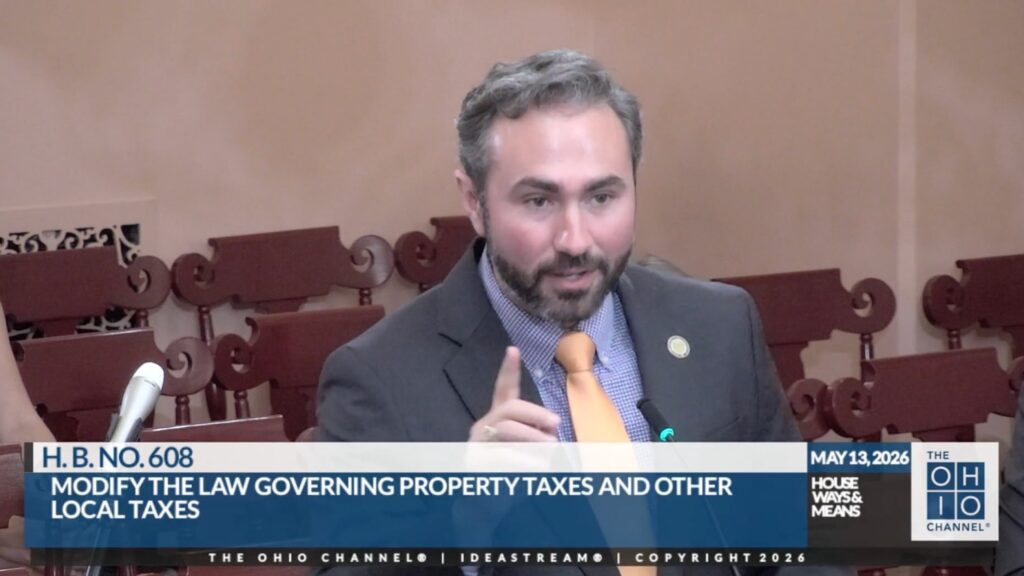
Ohio lawmakers in the state House introduced a property tax bill intended to help Ohioans with this issue by providing homeowners with a small tax credit.
House Bill 608 was called a “catch-all” by its sponsors, state Reps. David Thomas, R-Ashtabula County, and Chris Glassburn, D-North Olmstead. In testimony to the Ways and Means Committee, Glassburn acknowledged that not every property tax reform bill would radically change the system, adding that HB 608 is one of those bills.
“These aren’t the grand changes or groundbreaking ideas that this committee has become experts in handling, but that doesn’t mean they’re not significant,” Glassburn said in prepared testimony. “Dozens of issues, small and large, have led us into this property tax crisis.
“As we make reforms, there will be unintended consequences that occur, and we’ll need to do even more fixes like this,” the lawmaker added. “Simply put, this bill represents a collection of several small provisions that will make life better for our residents.”
According to Thomas’ testimony, there are six “tweaks” to the property tax system in the “catch-all” bill, one of which is a cash-in-hand proposition. Thomas added that the bill would allow direct credits to Ohio homeowners.
“Depending on what the costs are for actual reevaluation, what the actual expenses are, could be just about right or more in revenue than what’s necessary for those services, much like the budget commission,” Thomas said, according to the Dayton Daily News. “It’s not so much that an individual homeowner paid more than they should. They paid the correct amount in their property taxes, but it’s actually the auditor, not through his fault, just through lower expenses collected more than was needed.”
The nonpartisan Legislative Services Commission bill analysis said that Real Estate Assessment funds with more than $5,000 must be returned to the “taxing authorities that paid them,” according to the news source. Thomas told the Dayton Daily News that the disbursements are to be “applied ratably,” adding that this provision in the state law is “not one that is enforced or widely known.”
Thomas told state Rep. Dan Troy, D-Willowick, that counties would need to disburse funds equally across the country to those who own homes on next year’s tax bills if the bill is eventually signed by Republican Gov. Mike DeWine, the Dayton Daily News reported.
Some county auditors, however, opposed the bill because they believed it was flawed. Warren County Auditor Matt Nolan said that “the bill fails to understand how the real estate assessment fees are calculated,” adding that “there is no real functional way to give that money directly back to the taxpayer.”
“There is no fee applied to each parcel. It is a percentage-based system that comes out of the total collection, not off an individual parcel,” he said, the news source reported. “The percentage changes depending on how much money is brought in, but it isn’t computing that each parcel paid $50 in fees. If we were to give a credit back to taxpayers from that, it would effectively be redistributing money from one taxpayer to another, which would be challenged immediately.”
Montgomery County Auditor Karl Keith also opposed the bill, telling the Dayton newspaper that it “misleads” Ohioans into believing they are getting a significant tax break. However, Keith said the money they would receive would be minimal, and not everyone would get it.
“If we were to do it as this legislation is suggesting, only giving money to the owner- occupied property owners — who of course aren’t the only ones who paid that bill — they would get approximately $37,” he said. “That’s what they would have gotten in 2020. It would have been wrong to do that, but that’s what they would have gotten.”
Keith added that the bill is “unfair and inequitable” because it only refunds money to Ohioans who own homes, while indirectly excluding commercial property owners and renters, who also pay the REA fees.
Thomas defended the bill in an interview with the Dayton Daily News, saying that Ohioans who own homes need relief more than businesses do.
“I think it is a very equitable way to equally distribute among all of the owner- occupied properties the overage. That actually then helps those who probably have more of a need for tax relief,” he said. “For example, we did some things proportional to value in our other bills, but this is one way that we’re trying to target those at the lowest income and lowest value spot.”
Related Stories

DeWine issues order allowing Ohio Colleges to offer 2022 athletes a fifth year and access to NIL opportunities

Undercover video shows Ohio Dem canvassers being taught to lie to voters about Flock cameras