Ohio State University continues to require Marxist course for prospective K-5 teachers
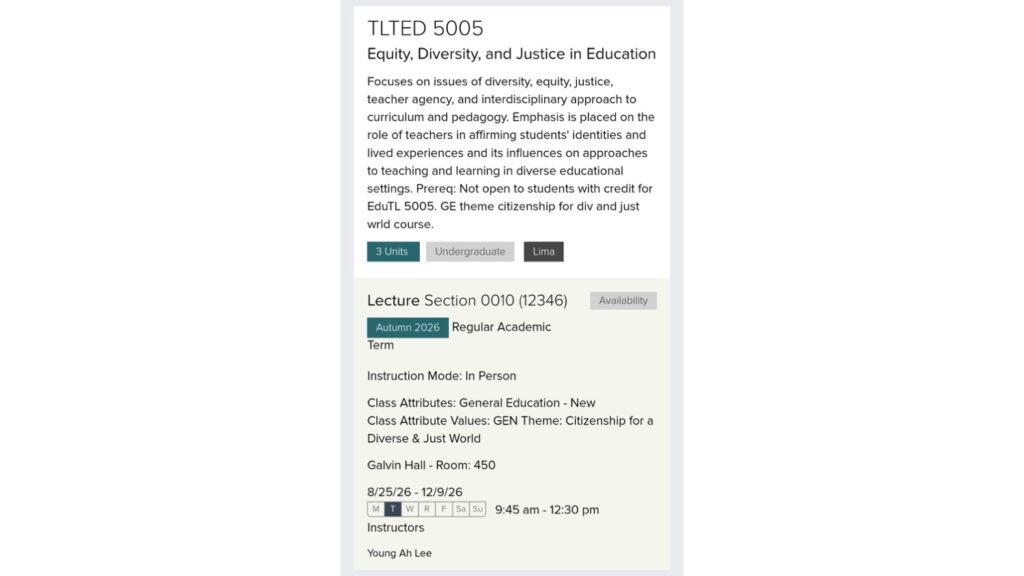
The publicly funded Ohio State University is still requiring a course titled “Equity, Diversity, and Justice in Education” for prospective K-5 teachers despite Senate Bill 1 having passed into law that bans many diversity, equity and inclusion initiatives at publicly funded universities, according to a researcher at a think tank.
The required course, EDUTL 5005, teaches K-5 educators to adopt a Marxist lens in which to address issues of systemic oppression, inequities and anti-racist practices.
As a 3-credit series contributing to teacher preparation and licensure, which includes required coursework on critical race feminism, critical pedagogy, whiteness studies, and globalization, along with social justice mathematics and the politics of queer leadership, the course remains a requirement for K-5 public school teachers to become accredited—despite recent legislation banning DEI practices in taxpayer-funded universities.
Senate Bill 1, the Advance Ohio Higher Education Act, signed by Republican Gov. Mike DeWine on March 28, 2025, and effective June 27, 2025, prohibits public institutions from maintaining DEI offices, mandatory training or programs that result in discrimination based upon race, ethnicity, sex, sexual orientation or gender identity. It also restricts institutional statements on controversial topics and requires intellectual diversity in classrooms, allowing students to form their own conclusions without indoctrination.
“DEI has become a system that sorts us, it sorts us by race, by gender and by identity, creating a culture where we are defined by our categories instead of our character,” state Sen. Michele Reynolds, R-Canal Winchester, said in a news release announcing the bill’s passage into law.
However, the law explicitly exempts academic courses offered for credit toward degrees or certificates. The Ohio State University’s recent implementation guidelines say that prohibitions on DEI-related orientation and training “do not apply to courses offered by academic units toward the completion of a degree or for-credit certificate programs.”
The University’s interpretation of the law, defiant towards legislative authority to oversee what it refers to as faculty freedom, argues that EDUTL 5005 is a credit-bearing academic course integral to teacher licensure pathways, and therefore exempt.
Despite the coursework’s requirement for K-5 public school teachers to adhere to Marxist theory, the university claims it has the unfettered authority to teach relevant material within an academic discipline — defined in the syllabus — as the bill does not ban discussion of controversial topics when presented with intellectual diversity.
Critics disagree that the course allows for intellectual diversity. Daniel Buck, Research Fellow at American Enterprise Institute and author of “What is Wrong With Our Schools,” took to X on Friday Feb. 13, 2026, calling out the syllabus, which opens with a land acknowledgement and quotes from two separate Marxists.
Equity, Diversity, and Justice in Education
A required course for prospective teachers at Ohio State University
The syllabus opens with a land acknowledgement and quotes from two separate Marxists
An inauspicious start pic.twitter.com/IAO1vmy0rn
— Daniel Buck, “Youngest Old Man in Ed Reform” (@MrDanielBuck) February 13, 2026
As of February 2026, Ohio State has complied with SB 1 by closing DEI offices, renaming centers and avoiding prohibited language in non-academic programming, while still preserving such coursework. No enforcement actions have targeted the course as University officials maintain that it aligns with the law’s carve-outs for academic instruction.
Critics, however, argue the coursework pressures early educators to conform to Marxist pedagogy—stifling both intellectual diversity and honesty in exchange for accreditation.
Following two consecutive legislative sessions and packed public hearings where concerned parents of K-12 students – urging lawmakers against carve-outs, citing ideological creep into the classroom – clashed with lobbyists from the nation’s largest teachers unions, SB 1 became law.
Yet, the distinction between prohibited administrative DEI efforts and the protected coursework that public universities require of future educators, still allows ideological agendas to continue unchecked by those elected to oversee the proper use of public resources.
Related Stories

DeWine issues order allowing Ohio Colleges to offer 2022 athletes a fifth year and access to NIL opportunities

Undercover video shows Ohio Dem canvassers being taught to lie to voters about Flock cameras