OhioHealth wants to dismiss the DOJ and AG Yost’s lawsuit due to the alleged lack of evidence

OhioHealth said in new court filings that neither the U.S. Department of Justice nor Ohio Attorney General Dave Yost, who sued the Columbus-based health care company, has evidence to prove it creates a monopoly in the area, and the healthcare giant is seeking to dismiss the federal antitrust lawsuit.
In its filed request for dismissal in the U.S. Southern District Court of Ohio, OhioHealth alleged that the case by the DOJ and Yost doesn’t have evidence of the company engaging in anti-competitive practices, adding that the case only highlights the competitive, free-market nature of Columbus’ health care market that results in “winners and losers,” according to The Columbus Dispatch.
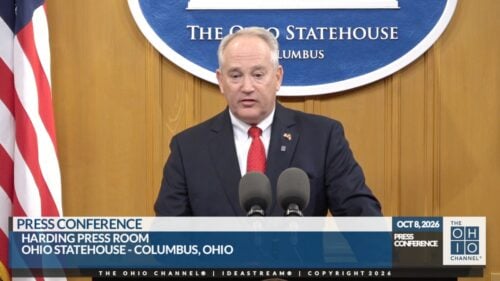
The DOJ and Yost announced a lawsuit against OhioHealth on Feb. 20, alleging that the company engaged in anticompetitive practices that reduced competition and allegedly forced Ohioans to pay higher healthcare prices due to a lack of other options.
“When competition is blocked, consumers end up being the biggest losers,” Yost previously said. “My office stands with the Justice Department in our determination to eliminate these types of unfair practices and protect Ohioans’ wallets.”
Former Attorney General Pam Bondi previously said that “Americans deserve low-cost, high-quality healthcare – not anticompetitive hospital system contracts that make healthcare less affordable.”
“Under President Trump’s leadership, this Department of Justice will continue taking legal action to protect consumers and drive down healthcare costs across America,” she said.
Even though the DOJ and Yost said in the lawsuit that OhioHealth holds unfair market power after it consolidated the health care system in the Columbus area, the government officials do not want OhioHealth to give up its market power, The Dispatch reported. Instead, they want the company to ease restrictions for insurance companies with which they contract.
The DOJ and Yost accused the company of violating Section 2 of the Sherman Act, the federal law that prohibits anti-competitive practices, by forcing insurers into an “all or nothing” deal due to OhioHealth’s size, which results in the insurers being prevented from offering Ohioans “budget-conscious” plans, according to the news source.
OhioHealth said in its request for dismissal that the complaint by the government officials is not specific enough to the company, since it allegedly fails to meet the standard of an antitrust violation case, according to the news source. The company also said that not entertaining certain insurance company deals doesn’t necessarily violate the Sherman Act.
OhioHealth also argued that it is not qualified to be seen as a company that holds insurance companies hostage with anticompetitive market power because, under DOJ standards, a company must have 50% market power, and OhioHealth has only 35%.
The Health Care Cost Institute, according to The Dispatch, said Columbus is a “highly concentrated” market, meaning healthcare prices are high because there is not enough competition. The institute added that people living in the Columbus area paid 12% more than the national average for health care in 2021.