PUCO whiplash: Ohio regulators advance unreliable energy projects amid affordability decision
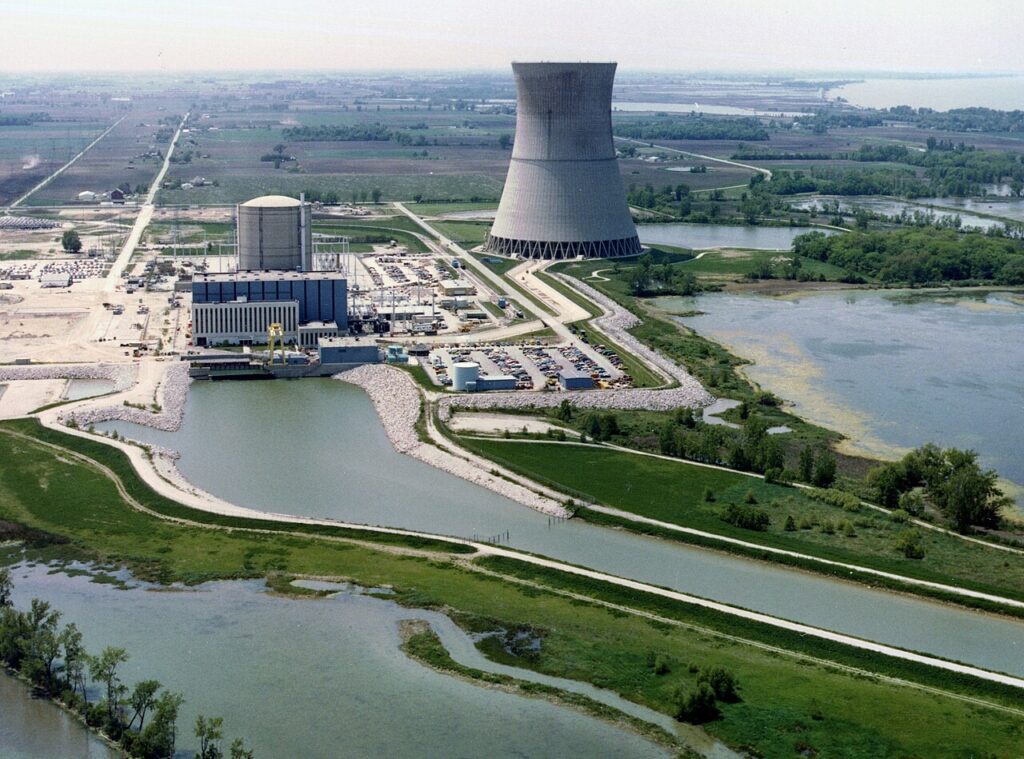
Davis-Besse Nuclear Power Station
Ohio regulators gave ratepayers whiplash after issuing contrasting signals on energy policy. The juxtaposition stems from two back-to-back energy decisions last month, moving forward with a costly, yet unreliable solar plant one day, then shielding ratepayers from sharp near-term bill increases tied to reliable infrastructure the next.
On Feb. 17, the Ohio Power Siting Board announced a March 26 local public hearing for Sloopy Solar Energy Center, a 180-megawatt utility-scale solar project proposed by Invenergy in Clark County. The facility, eyed for 2028 operation, would span about 1,600 to 1,900 acres of prime farmland. Developers moved forward despite unanimous opposition from Clark County commissioners in Jan., due to the loss of farmland and incompatibility with local planning.
Just one day later, on Feb. 18, the Public Utilities Commission of Ohio ordered three subsidiaries of FirstEnergy Corp. to amortize about $245 million in deferred storm restoration costs over 25 years instead of five, citing concerns over affordability. The order was issued during a rehearing of a Nov. case in which the PUCO had previously allowed the three companies to recoup the $245 million for storm-damaged poles, wires and substations over five years.
Yet, due to concerns related to the affordability of current and consistent power delivery, the PUCO reduced FirstEnergy’s annual revenues by roughly $39.4 million compared to the November 2025 ruling, drastically reducing the company’s budget to make timely repairs.
The juxtaposition highlights a policy tension: regulators prioritize short-term relief for distribution rates, defunding dependable, dispatchable infrastructure, yet advance costly solar developments whose nominal output depends upon intermittent sunlight.
Solar’s capacity factor in Ohio hovers around just 18.8%, per U.S. Energy Information Administration 2025 data, meaning it generates at full potential only a fraction of the time — far below nuclear’s 95.7% or natural gas plants’ 81.8%. Critics argue that the intermittency requires costly backups and grid upgrades — costs that are eventually passed onto ratepayers through future rate increases or PJM wholesale charges.
This instability in energy policy priorities has Ohio lawmakers questioning why ratepayers should be required to fund new investments in variable solar when they already shoulder the costs for proven systems.
Recent Ohio debates, including Senate Bill 294‘s push for reliable sources with high capacity factors, reflect Republican-led efforts to prioritize baseload reliability whenever the PUCO reviews applications for new energy infrastructure. Nuclear is one option that offers baseload reliability with near-constant output, minimal fuel volatility and long-term decarbonization without daily intermittency risks.
While opponents say the bill would prioritize fossil fuels and nuclear over “diverse” energy sources like wind and solar, the state’s 67 utility-scale solar plants have done nothing to reduce ratepayer costs — just the opposite, in fact.
According to EIA data, customer rates have jumped by a staggering 40% since 202,0 when solar installations began coming online. Despite billions in federal investments, grants, tax credits, and subsidies to develop these diverse “green energy” sources, rates have jumped from 12.4 cents per kWh in 2020 to 17.3 cents per kWh in late 2025.
The Republican sponsors of SB 294 have been very clear: when Ohio consumers pay for the cost of new energy infrastructure, reliable output and lower costs should be the PUCO’s top priorities.
Related Stories

Don’t know whether the Democrat is anti-war? Just ‘spitball and improvise,’ Dem organizer says in undercover video

Rep. Michelle Teska urges legislative action to require English proficiency rules amid public safety concerns