Ramaswamy promises more robust tax cuts than Acton, while disagreeing on medical debt forgiveness

While Ohio’s two top gubernatorial candidates promised tax cuts, they disagreed on other key policy areas, including medical debt forgiveness and data centers.
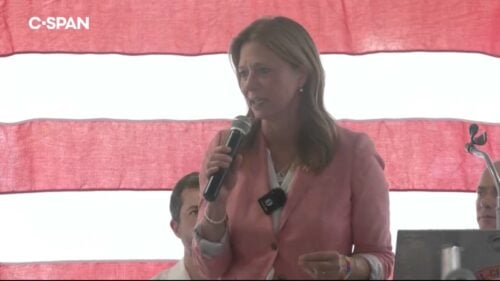
Both Republican Ohio gubernatorial candidate Vivek Ramaswamy and Democratic Ohio gubernatorial candidate Amy Acton agreed that Ohio’s taxes should be cut, but they disagreed on how to do so.
On Monday, Acton introduced her affordability plan that would allegedly help as many as 775,000 working families in the state, according to The Toledo Blade.
“As governor, my No. 1 priority will be to secure a tax cut for Ohio’s working families to put money back in their pockets, lift families out of poverty, and make sure Ohioans see their hard work pay off,” Acton said.
The news source reported that the plan includes an earned income credit, as well as a child tax credit of $1,000 per year for children under 6 and $500 per year for children aged 7 to 18, for families earning up to $85,000 annually.
“Under my working families tax cut, a married couple with two children earning $60,000 a year could receive an additional $1,778 back in their pockets,” Acton said.
However, as Statehouse News Bureau noted, while Acton proposed a bevy of ideas, she did not clarify how she would pay for them.
“Straight out of (Mayor Zohran) Mamdani’s NYC playbook, Liberal Amy Acton’s agenda means billions in new spending, higher taxes, and bigger government — with working families left holding the bag,” Ramaswamy spokesperson Connie Luck told The Columbus Dispatch in a statement.
Ramaswamy, on the other hand, previously proposed eliminating the income tax and cutting property taxes in the state. Ramaswamy previously wanted to abolish property tax but later moved away from that position.
“He’ll roll back property taxes to levels before the end of the pandemic, while maintaining strong education and dependable police and fire,” a speaker said in a recent Ramaswamy ad.
In April 2025, Ramaswamy told The State of Ohio that he believes lowering taxes will attract more people to the state, which, in turn, would lead to a stronger economy.
“We’re going to be 15 million people and growing by the time I’m done as governor,” he said. “That addresses our workforce shortage issues. It addresses our revenue issues. Think about what that does to our sales tax revenue.”
Jonathan Ewing, campaign manager for Vivek Ramaswamy for Ohio, also said in a March 27 press release that Ramaswamy “knows property taxes are crushing Ohio’s seniors and working families.”
“That’s why delivering real property tax relief has been a top priority since Day 1. He’s listening to Ohioans and offering real policy solutions to make life more affordable, while our opponent offers nothing more than empty promises that will cost Ohioans more,” he said.
In addition to left-wing groups, including Innovation for Ohio, Acton also criticized Ramaswamy’s plan, saying that his policies “are devastating for Ohio’s families and would make life even more unaffordable.” Even though Acton and Ramaswamy disagreed on the approach to tax cuts, they both agreed that tax cuts were necessary.
Despite some seeming agreement, they disagree on the issue of medical debt and whether it should be forgiven, with Acton saying that “no one should go bankrupt because of a necessary medical procedure,” which, she said, is very common, according to The Blade.
“Medical debt is the leading form of consumer debt, which is why on my first day in office I will direct our state to join the cities in our state — including Cincinnati, Cleveland, and Toledo — that have successfully relieved nearly a billion dollars in medical debt for working families, often for pennies on the dollar, giving families some breathing room and the fresh start they need,” she said.
Ramaswamy criticized the idea, according to The Blade, saying that forgiving medical debt would cost Ohio $15.1 billion. He also said that forgiving the medical debt doesn’t solve the problem of obscenely expensive health care in the country.
On data centers, Acton said she would hold the facilities accountable by requiring them to pay for energy, water, environmental protection, and other services, according to The Blade. Ramaswamy previously acknowledged that data centers are the reason Ohioans now pay more for electricity, but didn’t explicitly condemn the companies building them.
I’ve said this since the start of the year & will say it again: electricity bills will continue to shoot through the roof, unless we increase power generation in our state. AI data centers are increasing demand on our power grid precisely when supply is short, due to the left’s… https://t.co/pWuKBvRTEA
— Vivek Ramaswamy (@VivekGRamaswamy) July 30, 2025
A critical issue that almost no one is talking about: a looming electricity shortage in our state. We’re seeing an AI data center boom (which is good), right at the time when we face supply constraints on baseload power generation. That math doesn’t work. Electricity costs could… pic.twitter.com/t7ZgxubctS
— Vivek Ramaswamy (@VivekGRamaswamy) March 27, 2025
Ohio.News contacted both Acton and Ramaswamy’s campaigns, but didn’t receive a response from Acton’s campaign.