Sen. Jerry Cirino says he’s ‘pleased’ with progress of Senate Bill 1 so far
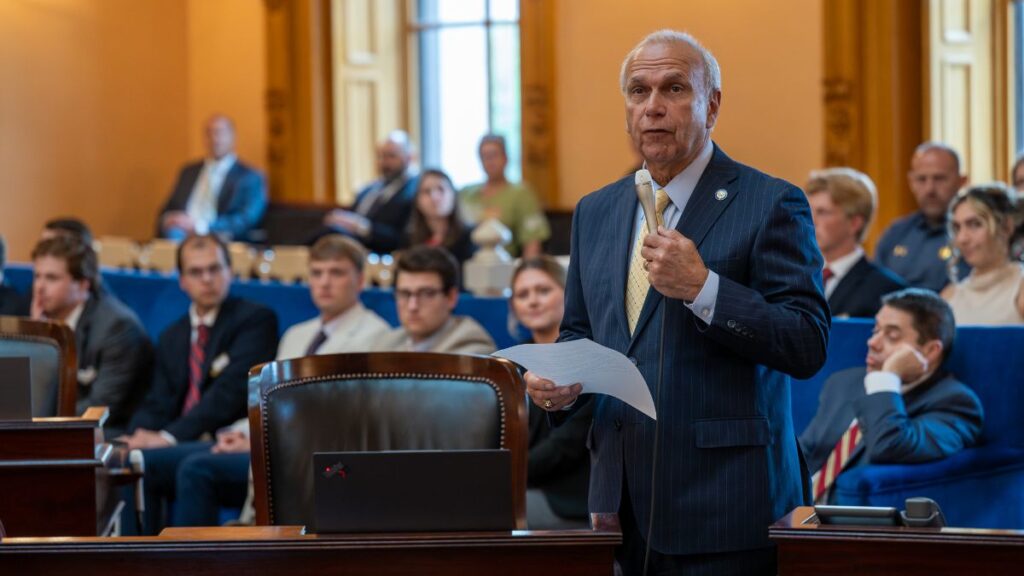
The architect of Ohio’s Senate Bill 1 said he’s pleased with compliance with the measure’s mandates so far, but said there is more work to do on the Diversity, Equity, and Inclusion front, which the bill prohibits.
In an exclusive interview with Ohio.News, state Sen. Jerry Cirino, R-Kirtland, touted the bill’s success but acknowledged some provisions still have some holdouts.
“I was very pleased with the progress. It’s not perfect; we still have some holdouts in some areas,” Cirino said. “The DEI area is one of them. We knew that was going to be a problem, so we’re watching that very carefully.”
In House Bill 96, the operating budget for fiscal 2026 and fiscal 2027, lawmakers included $75 million that the state could withhold from public higher education institutions that do not comply with the measure. However, Republican Gov. Mike DeWine subsequently vetoed that provision.
Ohio.News has highlighted several undercover videos released by Accuracy in Media showing higher education officials, including those at the University of Toledo, Kent State University, and the University of Cincinnati, flouting the anti-DEI provisions of SB 1, also known as the Advance Ohio Higher Education Act.
In recent weeks, headlines about the bill have focused on colleges and universities eliminating degrees with insufficient enrollment. Under the measure, schools must nix undergraduate degree programs that bestow fewer than five degrees annually over three years, and schools across the Buckeye State have eliminated 90 undergraduate degrees to comply with the mandate.
The mandate is similar to one in neighboring Indiana.
“You could look at three-quarters of Senate Bill 1, and I could tell you that the boards of trustees could have done everything that we have in the bill on their own, but we were in a woke environment,” Cirino said. “What board of trustees wanted to get rid of discriminatory hiring and only interviewing candidates that are of a certain color or gender, which is a violation of several civil rights laws. But nobody wanted to address that.
“Why did we have to pass this law with all of these components? Because they were not self-correcting,” Cirino added. “And sometimes, when that happens, you need somebody from the outside to come in and say, ‘Hey, let’s clear the decks here; let’s fix this stuff.’ And that’s what I did with my bill.”
Overall, Cirino said the response to the bill has been positive.
“The numbers are the numbers, and the universities cannot afford to continue this, and they’re going to be so much better off for following through with this,” Cirino said, adding that lawmakers didn’t want to steer schools in a particular direction for which degrees to eliminate.
“There’s always going to be phone calls that we get, ‘Hey, you eliminated the gender studies major over at Kent State,’” Cirino said. “Our view is, we weren’t targeting that. They don’t have enough majors for three years. That’s the letter of the law. That’s what we’re going to follow here, right? And so there’ll be some complaints, but overall, it is good for our universities and community colleges, and it’s going to allow them to better place resources in the areas that are most necessary at this point.”
Related Stories
Husted calls for national ban on driver’s licenses for illegal aliens
Questions emerge about Canfield Fair incident involving Amy Acton after man charged with misdemeanors, given $5,000 bond