SUIT: Former Columbus police officer alleges she was fired because she is white
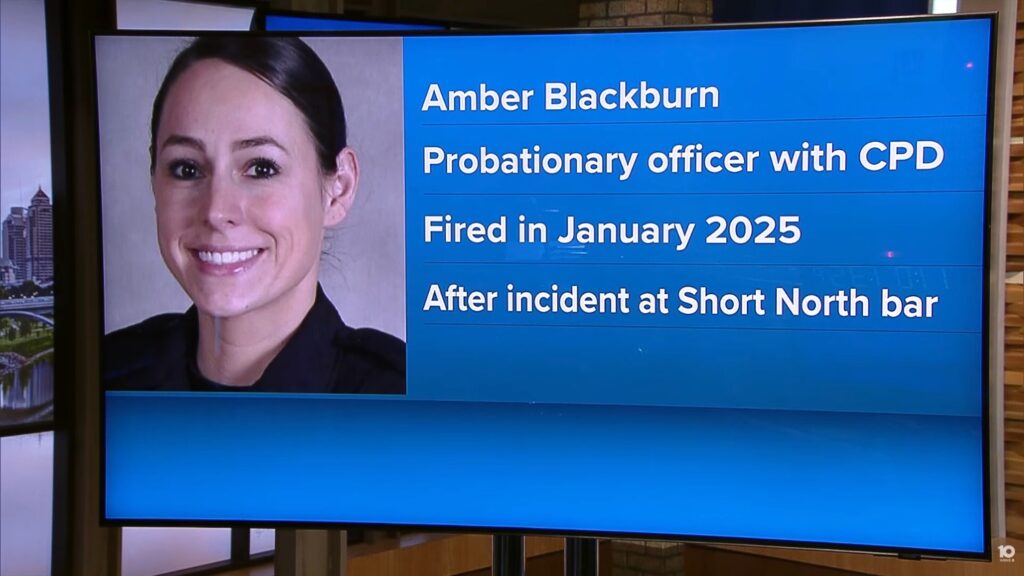
A former Columbus police officer sued the city and its police department, saying in the lawsuit that she was fired from her job because of her race and biological sex.
On April 27, Amber Blackburn filed the lawsuit in U.S. District Court, accusing the city of Columbus, as well as Chief Elaine Bryant, Assistant Chief Nick Konves, Director of Public Safety Kate McSweeney-Pishotti, and Columbus police officers Christopher Darlington and Ian Mansperger of race and sex-based discrimination, according to The Columbus Dispatch.
The report by the news source said that the police fired Blackburn in January 2025, after the department discovered that she had gotten into a physical altercation with other patrons inside a local bar while off duty on Jan. 25, 2025.
Blackburn could’ve been legally fired right away as a probationary officer, before she completed her first 12 months after graduating from the police academy, the Columbus newspaper reported.
The Columbus Dispatch reported that Blackburn said in the lawsuit that Konves, Bryant, Darlington, and Mansperger discriminated against her because she is a white woman.
If she wins the case, Blackburn wants the department to pay for the alleged racial and sexual discrimination, including back pay, according to The Dispatch.
“There is no rational explanation for the duplicity of Officer Darlington, Officer Mansperger, or Assistant Chief Konves, the inaction of Chief Bryant and Director McSweeney-Pishotti, or for Ms. Blackburn’s disparate treatment, save one: that the City’s claims against her were nothing more than a pretextual justification for an unlawful termination,” the lawsuit said, according to the news source.
There may have been other reasons Blackburn is no longer a police officer, according to The Dispatch. The report said that Blackburn was also terminated from the Minerva Park Police Department over allegedly having multiple issues during her probationary period, “including missing a mandatory training, wanting to work a shift that went outside the normal probationary officer guidelines, and issues with timeliness.”
Meanwhile, according to another report by The Dispatch, Columbus is now ready to settle with a former city police sergeant, who filed a similar racially related case in 2022, arguing that the Division of Police demoted him in 2021 to a patrol officer because of his age, biological sex, and race.
Wilson alleged in the lawsuit that he suffered retaliation and discrimination after a black cadet accused him of using a racial slur in 2020, even though he never used the slur and committed no misconduct, his attorney, Judith Galeano, told the news source. Additionally, Wilson’s attorneys said that he was not at work when the slur was allegedly used.
Columbus City Council voted on April 20 on a $750,000 settlement negotiated by the City Attorney’s office with Brooke Wilson, who filed the lawsuit, according to the news source.
The city agreed to settle the case not because it admitted that the local authorities discriminated against Wilson, but because the government doesn’t want to spend any more of taxpayers’ money on the case, even though the city had been defending itself in the case for over four years now, while using taxpayers’ money.
“While we remain confident in the merits of the investigation, settling this case is the most responsible course of action to limit financial exposure and protect the taxpayers of Columbus,” the police department said, per the report.
If the settlement is approved, Wilson would need to dismiss the federal lawsuit.
“I think [the settlement is] a good result for Brooke Wilson, now reinstated as Sgt. Wilson,” Galeano said, per the report. “Because what happened to him was wrong on multiple levels. Not only was he disciplined and suspended, but he was then demoted after years of service without one prior incident of discipline.”
Related Stories

New poll shows tight Senate, governor’s races

The slow walk to socialism: Undercover video lifts lid on Ohio Democrats’ plan for state