Trump reclassifies marijuana as less dangerous as Ohio becomes more strict
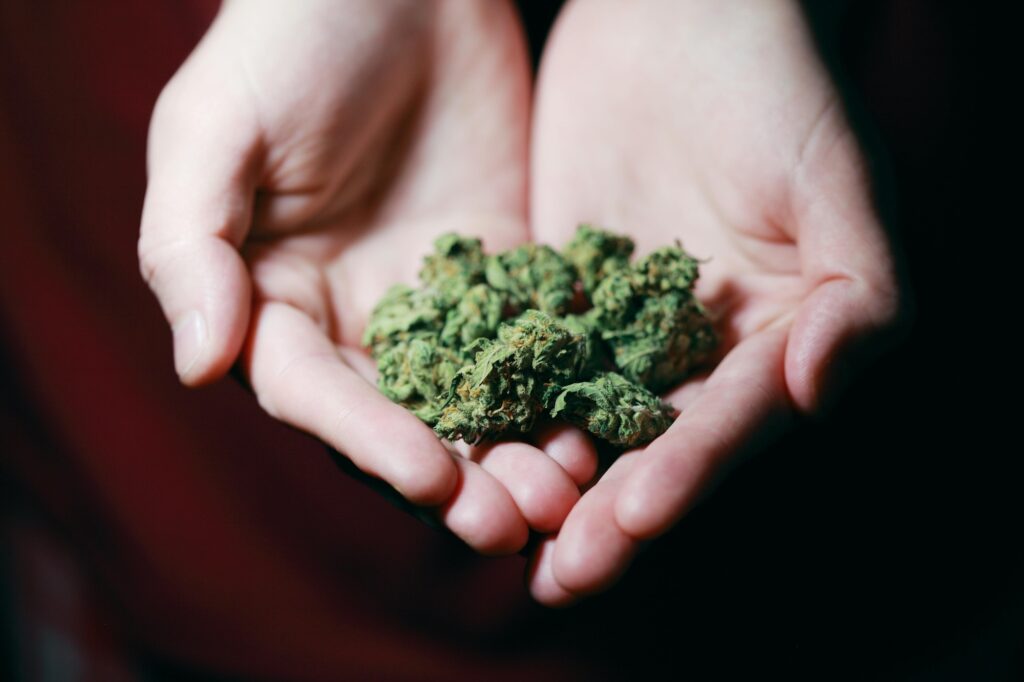
(Photo by Alexander Grey: https://www.pexels.com/photo/kush-in-close-up-photography-3676962/)
President Donald Trump signed an executive order on Thursday that would reclassify marijuana as a less dangerous drug on the federal level, which would result in loosening the restrictions.
After the Drug Enforcement Administration finalizes the order, it will move cannabis out of Schedule I classification, which is the most restrictive category under the Controlled Substances Act, to a Schedule III classification, according to CNBC. By doing this, marijuana would be placed on the same level as ketamine and Tylenol with codeine.
“This action has been requested by American patients suffering from extreme pain, incurable diseases, aggressive cancers, seizure disorders, neurological problems, and more, including numerous veterans with service-related injuries, and older Americans who live with chronic medical problems that severely degrade their quality of life,” Trump said, according to reports.
Ben Kovler, founder and CEO of the cannabis company Green Thumb Industries, praised Trump’s recent decision in his statement to CNBC.
“Millions of registered patients across the United States, many of them veterans, rely on cannabis for relief from chronic and debilitating symptoms. We commend the administration for taking this historic step. This is only the beginning,” he said.
Before signing the executive order, Trump said on Monday that he is looking “very strongly” at reclassifying marijuana from the strictest category of controlled substances, according to the Ohio Capital Journal.
“A lot of people want to see it — the reclassification — because it leads to tremendous amounts of research that can’t be done unless you reclassify,” Trump said. “So we are looking at that very strongly.”
While Trump makes it easier to obtain marijuana on the federal level, Ohio attempts to make it harder.
In late November, the Ohio House passed anti-marijuana and anti-hemp legislation that would maintain the current 10% adult-use marijuana tax rate, eliminate the voter-approved Cannabis Social Equity and Jobs Fund, allocate 36% of revenue from excise tax to the Host Community Cannabis Fund for local communities, and bar packaging targeted at children.
“For many years now, the Ohio General Assembly has debated what our public policy should be towards marijuana, intoxicating hemp products, and the emergence of THC-infused beverages,” conferee State Rep. Brian Stewart, R-Ashville, said. “Today we get to strengthen Ohio’s economy, protect Ohio’s children, support our local governments, and respect the individual liberties of our fellow citizens.”
Even though pro-marijuana groups opposed the bill, urging the state Senate to block it, the Senate passed it and sent it to Ohio Gov. Mike DeWine.
Earlier this month, DeWine confirmed that he will sign the bill.
“To me, it’s a major, major victory, and it’s a long time coming. But it’s a major victory, I think, for kids in the state. There’s going to be some regulation. They won’t be able to have juiced-up hemp gummies. They won’t be able to walk into a gas station and an 11-year-old buy this stuff,” he said.