Veteran lawmaker finds millennial ally in decade-long Big Brother battle
After more than a decade battling what he calls government overreach and automated “cash grabs,” veteran state Sen. Tom Patton, R-Strongsville, has gained a powerful new partner in freshman Rep. Meredith Craig R-Smithville, a young lawmaker who represents Gen-Z’s growing distrust of AI and government surveillance.
The National Week of Action Against ALPRs is coming August 16–22.
If you care about privacy, surveillance, and the right to move through your community without being tracked, now is the time to get involved.
Sign up and help organize in your area:https://t.co/hF7EIgkFzC pic.twitter.com/aotiHbrtBH
— DeFlock (@therealDeFlock) June 2, 2026
Patton, 72, has waged this fight since at least 2016. Back then, as a senator, he introduced four separate bills targeting small towns using traffic cameras as revenue tools.
A Republican senator’s bill aimed at “cash grab” traffic cameras would require voter approval before the use of the technology in cities.https://t.co/JLM9JB3cxf pic.twitter.com/eui2bSTe3o
— Gongwer Ohio (State Affairs Ohio) (@gongwer) January 22, 2026
Yet, as the legislation advanced to cap the profits collected via traffic camera citations, the Village of Newburgh Heights and the City of East Cleveland sued—arguing the legislation violated the Home Rule clause of Ohio’s constitution.
Following the lawsuit, however, exemptions were made for cameras in school zones, which have reportedly made millions in some areas, according to Cleveland news.
In areas like Linndale, with a population of about 100, reports revealed that the camera on Memphis Road near Bellaire Road generated nearly $2.3 million in one year’s time. Newburgh Heights, where third-party vendors send tickets by mail, cameras reportedly brought in $4.9 million in annual fines.
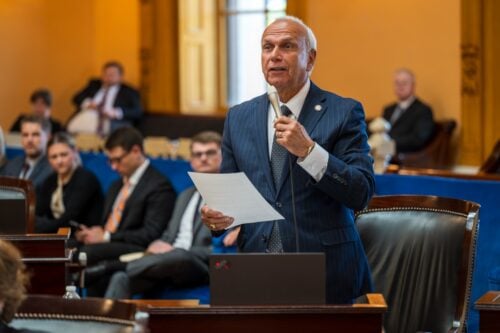
A decade later, Patton’s sentiments remain unchanged. Sponsoring Senate Bill 340, Patton told reporters: “I’ve called it a cash grab for many years now.”
During sponsor testimony before the House Local Government Committee last week, Patton emphasized the school zone loophole as evidence of the bill’s necessity.
“My own district provides a clear example of why this legislation is needed,” Patton said. “The Village of Smithville recently implemented a speed camera program in school zones despite employing a full-time police department consisting of a chief of
police and four full-time officers.”
Smithville, which Patton referenced as “a small, one-stoplight community,” said that residents have repeatedly questioned why officers are not being utilized to patrol these areas.
Patton argued that the presence of police officers provides better enforcement, while creating circumstances in which they can exercise discretion—fostering positive interactions with the community.
“They say this is all about safety. But how is it about safety if we’re not contacted until 30 days after the violation? I think it’s appropriate to let the voters decide,” Patton added.
Now, Patton has found an ally in Rep. Craig, a freshman serving her first term in office after winning the 2024 election. The young Wayne County representative, part of a newer generation of lawmakers, introduced House Bill 843, the companion to Patton’s SB 340.
In her testimony, Craig emphasized accountability and local control.
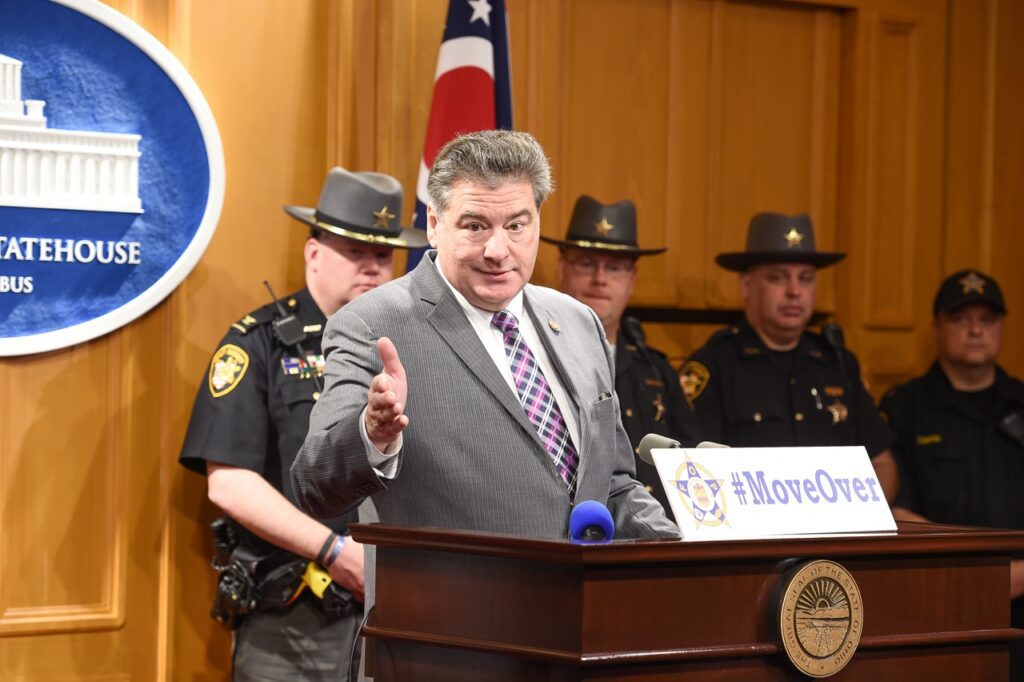
“At its core, this legislation is about accountability,” Craig said. “Traffic laws exist to promote public safety, but when enforcement is delegated to cameras rather than law enforcement officers, residents should have the opportunity to decide whether that is the approach they want their community to take, especially if the community is already employing and paying for a full-time police department.”
Craig added that Ohioans deserve transparency, accountability, and a meaningful voice in decisions, while emphasizing that “HB 843 ensures that the people who live in the community have the opportunity to decide whether traffic cameras should be used in their town.”
While not an outright ban, the proposal would require majority voter approval before cities or villages can start or continue using the automated red-light and speed camera programs. Existing contracts, with third-party vendors, would also require voter approval upon renewal or extension.
Speed cameras are a cash grab in almost all cases. They are frequently set up in places that the speed limit should be higher anyway. 15+ on surface roads, or not following flow of traffic on highways (even too slow here) they are useful. Any other time (42 in a 35) is just…
— Trevor Majors (@Trevor_Majors) May 24, 2026
Yet, as Patton outlined in his testimony, voters have overwhelmingly rejected the use of traffic cameras.
“Voters have rejected traffic cameras in more than 91 percent of elections,” Patton said. “These results send a clear message that when citizens are given a voice on the issue, they overwhelmingly choose not to allow automated traffic enforcement in their communities. House Bill 843 simply ensures that Ohioans have the same opportunity to make that decision for themselves.”
Rep. Roy on FISA: "I don't want to live in a surveillance state. This isn't just Big Brother. We used to joke about that stuff in 1984. It's real. It's happening right in front of us." pic.twitter.com/RAMW0FZTVD
— Rep. Chip Roy Press Office (@RepChipRoy) June 4, 2026
Prior to COVID-era shutdowns and the weaponization of government, trust in government made “Big Brother” sentiments seem hyperbolic. Today, surveillance state concerns have become common, as many now realize the potential for overreach.
According to the Organisation for Economic Co-operation and Development, declining trust in government is rooted in the public’s doubts about the accountability and transparency of public institutions and responsiveness to public participation.
Assuring colleagues that the bicameral effort does not violate Home Rule, Patton and Craig urged the passage of HB 843, calling it an important opportunity to restore transparency and public participation.
The bill currently awaits further consideration in the House Committee on Local Government.