Auditor says ‘Ohio does not have a shortage of warning signs’ for fraud
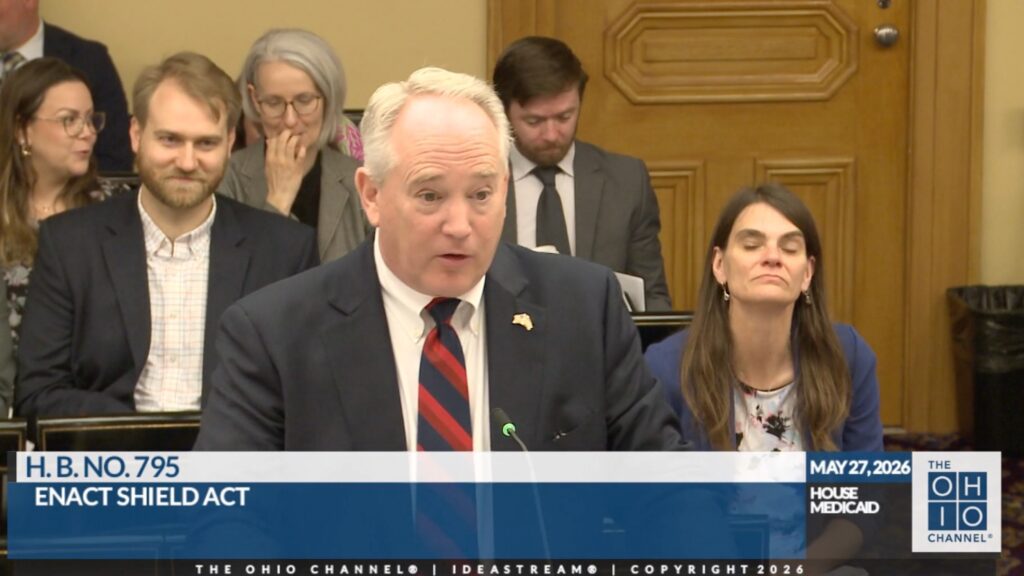
Among the proposed changes to crack down on Medicaid fraud in Ohio is a mandatory GPS requirement for Electronic Visit Verification.
The 21st Century Cures Act, passed by Congress a decade ago, required states to implement EVV.
But evidence to date shows that EVV tracking — intended to confirm that Medicaid-funded home care is going to the right people — has been a weak link in the state’s anti-fraud posture.
“Ohio does not have a shortage of warning signs,” Ohio Auditor Keith Faber said in prepared testimony to the Joint Medicaid Committee last week. “Ohio needs stronger controls, better data, more accountability, and clearer authority to act when public dollars are at risk.”
Amid headlines and allegations of widespread fraud in the state, Republican Gov. Mike DeWine announced new measures to prevent fraud. Among them was a provision mandating that providers using EVV use GPS and requiring EVV for live-in caregivers as a condition of payment; family and live-in caregivers were previously exempt from this requirement.
DeWine’s office said that since March 2025, Ohio Medicaid has started phasing in EVV as a mandatory requirement for home healthcare provider payment. In December, DeWine authorized Ohio Medicaid to start making the technology investments needed to make GPS mandatory for EVV.
However, in November 2024, Faber’s office released a performance audit of the EVV system.
“Our audit found that 56 percent of home care services were not processed through the EVV system,” Faber said in prepared testimony. “That represented an estimated $1.1 billion of $2 billion in paid claims that were not matched to an EVV visit.
“That is a major control failure,” Faber added.
Faber said his office “identified more than $9 billion in unsupported, improper, or fraudulent spending across all levels of government, with unemployment and Medicaid among the largest areas of concern,” since taking office. Additionally, Faber said this year’s State Single Audit “identified potential fraud-related concerns in Ohio Medicaid programs estimated between $800 million and $4.4 billion.”
An amended version of House Bill 795, which lawmakers are considering, would strengthen oversight of EVV.
“Home and community-based services are often delivered in private homes and outside traditional institutional settings,” Faber said. “That makes strong verification especially important. Without reliable EVV
data, the state has a harder time confirming whether services were delivered as billed, identifying improper payments, and detecting patterns that may indicate fraud, waste, or abuse.”
As amended, the measure would require the Department of Medicaid to maintain a statewide EVV performance dashboard. The dashboard would include utilization rates, claim-match rates, provider compliance trends, the percentage of claims supported by verified EVV documentation, and aggregate data on manual adjustments.
It also requires an annual EVV utilization and compliance report to the governor, the speaker of the House, the president of the Senate, and the state auditor.
“That report would provide regular information on provider utilization, missing or incomplete EVV data, manual entries, modified visits, late entries, unmatched claims, claim denials, compliance trends, enforcement actions, and recommendations for improvement,” Faber told lawmakers.
Perhaps most importantly, Faber said the bill moves the state toward mandating that Medicaid claims subject to EVV be supported by a validated EVV record as a condition of payment.
“That is common sense,” Faber said. “If the state requires providers to use EVV, then the state should also use EVV to verify payment. Otherwise, the system becomes a paperwork exercise instead of a program-integrity tool.”
However, the head of the Ohio Department of Medicaid said EVV is “not a silver bullet.”
“It’s absolutely not a silver bullet to protect fraud,” Medicaid director Scott Partika told the committee, Statehouse News Bureau reported. “If someone still wants to defraud our system, they can use even GPS verification, and they could claim to be where they are, and not providing services.”
The state attorney general’s office wants lawmakers to designate Medicaid fraud as a predicate offense under the Engaging in a Pattern of Corrupt Activity statutes.
“In our experience, these provider networks often work in concert, and by granting prosecutors an additional tool to charge bad actors, the state stands a better chance to deliver justice for the taxpayers,” Ben Karrasch, director of the Ohio attorney general’s Medicaid Fraud Control Unit, told the committee, Statehouse News Bureau reported.
“We will see cases where, okay, here is Provider X and they’re gone,” Karrasch added. “And then we go over to Provider Y to investigate, and they’re sitting there behind the counter. So we’re they’re working together. They’re networking together. We have we have tools to analyze this sort of thing.”