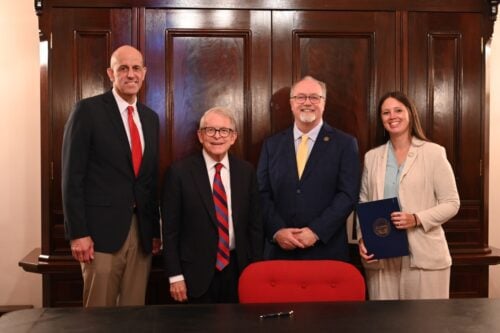
DeWine continues pattern of delaying executions with three new reprieve orders
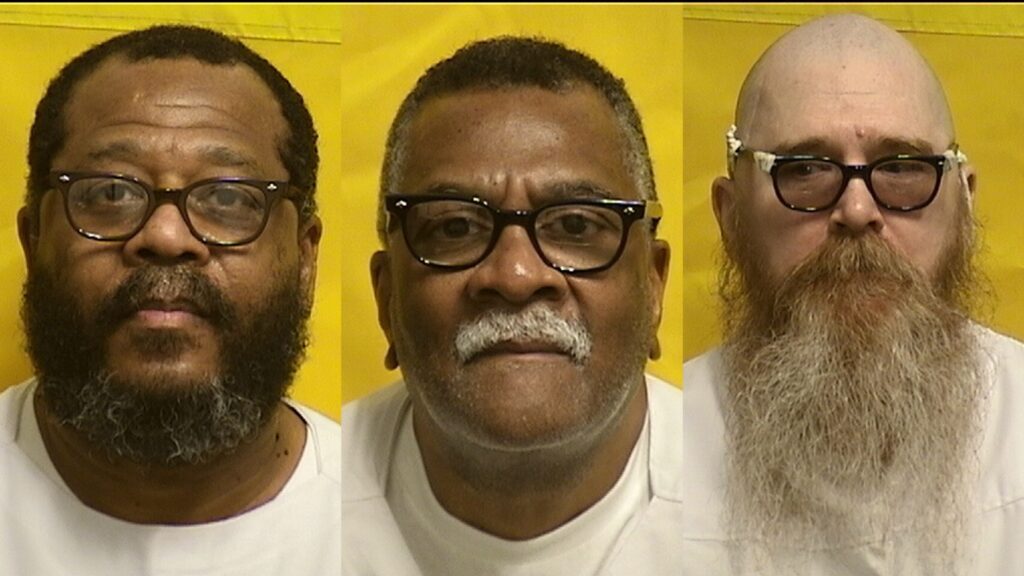
From left, Jerome Henderson, James O’Neal, and Melvin Bonnell
Gov. Mike DeWine has issued reprieves delaying the executions of three Ohio death row inmates, continuing to cite ongoing difficulties in obtaining lethal injection drugs from pharmaceutical suppliers while denying legislative alternatives.
The reprieves have once again pushed back the scheduled deaths of three death row inmates and continue a years-long pattern without resolving the underlying policy debate on capital punishment in Ohio.
James O’Neal was convicted of aggravated murder in the September 1993 death of his estranged wife, Carol O’Neal. On Dec. 7, 1993, court records show that O’Neal had assaulted his wife. As a result, she filed a domestic violence charge and an application for a temporary protective order the same day.
She also changed the locks, kicking O’Neal and his two children out of the house. On Dec. 11, 1993, according to reports, O’Neal called his wife at work and threatened her. Later that day, he returned to the home and found the locks had been changed.
According to court records, that’s when O’Neal kicked in the front door, following Carol upstairs, where he fatally shot her to “teach her a lesson.” Carol’s son Ricardo witnessed the shooting and said O’Neal also tried to shoot him, but the gun jammed.
O’Neal, on death row since 1993, has been issued a reprieve until Aug. 14, 2029.
Melvin Bonnell was convicted in the November 1987 murder of 23-year-old Robert Eugene Bunner in a Cleveland apartment. Witnesses said Bonnell knocked, entered when Bunner opened the door, uttered an expletive and shot him twice at close range.
As Bunner lay motionless on the floor, Bonnell continued beating him, according to court documents. Bonnell, supported by anti-death penalty activists, filed for a retrial on the grounds of prosecutorial misconduct in 2020.
Multiple courts, including the U.S. Supreme Court, dismissed the motions, ruling the evidence was insufficient to overturn the conviction. His scheduled death has been delayed until Oct. 18, 2029.
Jerome Henderson was convicted of aggravated murder, burglary and attempted rape in the March 1985 death of 26-year-old Mary Acoff in her Cincinnati apartment. Acoff was found stabbed and beaten to death, her throat slashed at least 13 times, records show.
Acoff’s lifeless and nearly decapitated body was discovered by her daughter JoAnn, who was just 10 years old at the time. JoAnn Acoff, urging the state not to spare Henderson’s life as he did not spare her mother’s life, said that she remains traumatized from finding her mother “almost decapitated,” according to state records.
Shirley Acoff, Mary’s sister, read a family statement describing “the emotional drain that the crime has had on all of the family members,” adding that “the anguish and pain have not healed and that she knows executing Henderson will not bring their loved one back,” according to state records.
She noted that executing Henderson “will not bring our loved one back, but it will help with bringing closure.” The family has said they “will never be able to close a very painful chapter” until the sentence is carried out. Henderson, who has been on death row for over 40 years, has been issued a reprieve until Sept. 18, 2029.
Ohio has not carried out an execution since DeWine, a Republican, took office in 2018. In lieu of an official opinion expected from the governor’s office in January of 2026, DeWine has repeatedly postponed scheduled executions, effectively maintaining a moratorium on the death penalty.
Critics, including Attorney General Dave Yost, have called the pattern a “mockery of victims and their families,” leaving them in prolonged limbo.