Ohio House Medicaid Committee weighs stronger digital tools to safeguard against fraud
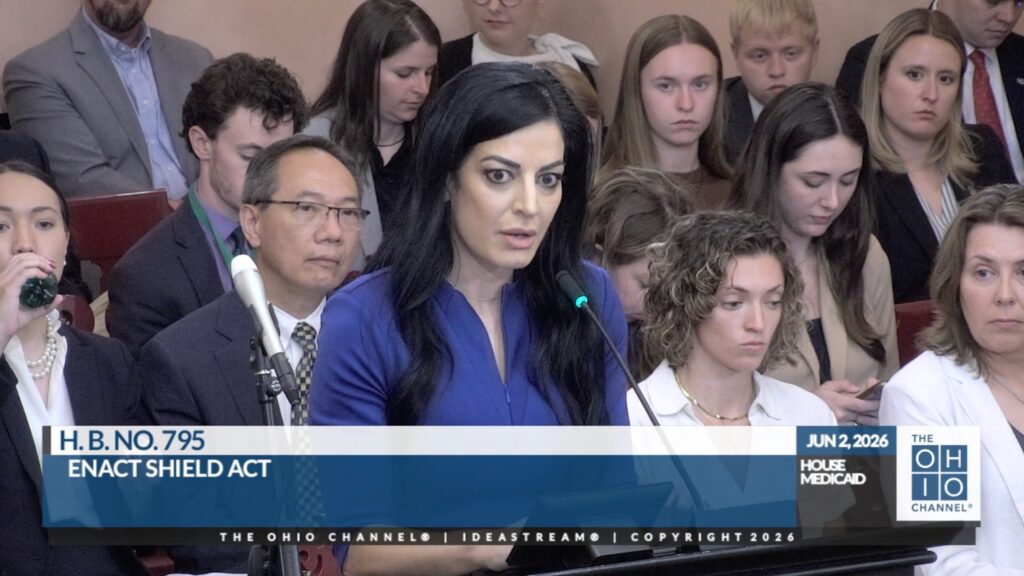
The Ohio House Medicaid Committee continued taking testimony on House Bill 795, a substitute bill titled the Safeguarding Healthcare Integrity through Electronic Location Data or SHIELD Act, aimed at creating digital control tools to identify Medicaid fraud and adding enforcement mechanisms.
Yesterday I introduced the substitute bill for HB 795, a comprehensive effort to combat Medicaid fraud, waste, and abuse in Ohio.
I’m grateful for the work of many colleagues who contributed to this legislation to protect taxpayer dollars and strengthen program integrity. pic.twitter.com/ZdyG25UzP9
— State Representative Mike Dovilla (@RepMikeDovilla) May 28, 2026
The committee held two hearings this week, the first of which opened with proponent testimony from Mehek Cooke, an Ohio attorney and Fox News contributor, who detailed concerns from whistleblowers fearful of coming forward.
Here is proof that the Ohio Department of Medicaid, custodians of our tax dollars subcontracted supervision and accounting. pic.twitter.com/KdBfiOLtNw
— Mehek Cooke🇺🇸 (@MehekCooke) May 30, 2026
Emphasizing the cultural aspects of Sharia law practices that enforce codes of silence, Cooke relayed that whistleblowers “feared they would be ‘stoned to death’ by members of their community if their identities became known.”
🚨 WOW. Ohio attorney Mehek Cooke CONFIRMS MASSIVE fraud in Ohio, another hotbed for Somalis
They run fake "home health" and bill $250,000 PER YEAR, per FAMILY, when no work is actually being done
She says it also happens in PENNSYLVANIA
"Audit America. Audit Ohio now. And I'm… pic.twitter.com/hZd5agaNfi
— War Correspondent (@warDaniel47) May 28, 2026
She described a system with weak verification, aggressive enrollment practices, and potential retaliation risks, urging stronger front-end protections.
🚨 In December I filed an Ohio Medicaid public records request for home health agency data.
FIVE MONTHS later – “Go ask our contractor."
Billions in taxpayer dollars. Potential fraud. The state can't answer where our money went.
This is what protecting fraud looks like. pic.twitter.com/MthFl6soBd
— Mehek Cooke🇺🇸 (@MehekCooke) May 29, 2026
Donovan O’Neil, state director of Americans for Prosperity-Ohio, followed with strong proponent testimony, detailing the growth rate of payments versus recipients.
“Ohio Medicaid has grown from $16.99 billion in FY 2016 to $22.3 billion appropriated in FY 2026 now consuming over 50% of the state’s total GRF budget,” O’Neil said. “We have long opposed Medicaid expansion because we understood that a program expanded without the accountability infrastructure to match was a program set up to fail the people it was meant to serve. The fraud crisis playing out now is exactly what we warned about.”
“The substitute version of H.B. 795 represents a meaningful step forward on each of these fronts,” he continued. “HB795 is the kind of structural reform AFP-Ohio has advocated for since before this crisis became a public scandal.”
Medicaid fraud cases are increasingly digital, and investigators need the authority to keep pace.
In committee, I asked how elements of HB 683, now included in the HB 795 substitute bill, will help streamline investigations, secure key evidence, and protect taxpayer dollars. pic.twitter.com/ImQ7RsxsbU
— State Representative Mike Dovilla (@RepMikeDovilla) May 28, 2026
The updated version of the bill strengthens provider enrollment by requiring in-person site inspections and address-sharing limits, making GPS-enabled Electronic Visit Verification a condition of payment.
If enacted, the bill would also expand fraud detection and penalties for enforcement actions, such as first-degree felonies for major cases, while granting the Auditor subpoena authority and creating a statewide EVV dashboard. Sponsors emphasize that the measures will improve transparency to safeguard funds for seniors, people with disabilities, and families.
Wednesday’s hearing, the fourth on the measure, featured additional public testimony from opponents as the committee continued its review of the legislation. Opponent testimony, largely from those caring for family members, expressed concerns about losing services.
Waste, fraud, and abuse aren’t just budget problems — they’re human ones.👏🏼👏🏼
Fraud, waste, and abuse in Medicaid hurt the very people the system is supposed to protect.
Every dollar lost to fraudulent activity is a dollar not going toward individuals with significant support… pic.twitter.com/N8hqvUJF1y
— Able Americans (@AbleAmericans) May 26, 2026
Supporters, however, including Able Americans, an advocacy group for disability rights, and Ohio’s Auditor Keith Faber, have underscored the urgency of passing the reforms in order to prevent the loss of services.
At a time when affordability is top of mind for Ohioans, we cannot allow taxpayer dollars to be lost to fraud, waste, and abuse.
Every dollar should be spent as intended, serving the people these programs were created to help. https://t.co/mcjcQf3yEB
— Keith Faber (@KeithFaber) June 3, 2026
Faber, who has flagged major gaps in performance audits — about 56% of home care services totaling about $1.1 billion of $2 billion in claims — equivocated the fraud to stealing from the pockets of “Bob and Betty Buckeye.”
During the interested-party testimony, Faber pegged the annual cost of Medicaid fraud at about $2,000 per Ohioan. In a rough estimate of about the same amounts found for unemployment fraud, Faber estimated that another $2,000.00 is being stolen from every employee in the State of Ohio per year.
“Again and again, the pattern is clear. Ohio does not have a shortage of warning signs. Ohio needs stronger controls, better data, more accountability, and clearer authority to act when public dollars are at risk,” Faber said.