Ohio lawmakers continue introducing property tax relief solutions
Several Ohio lawmakers have introduced resolutions that would help Ohioans with their property taxes.
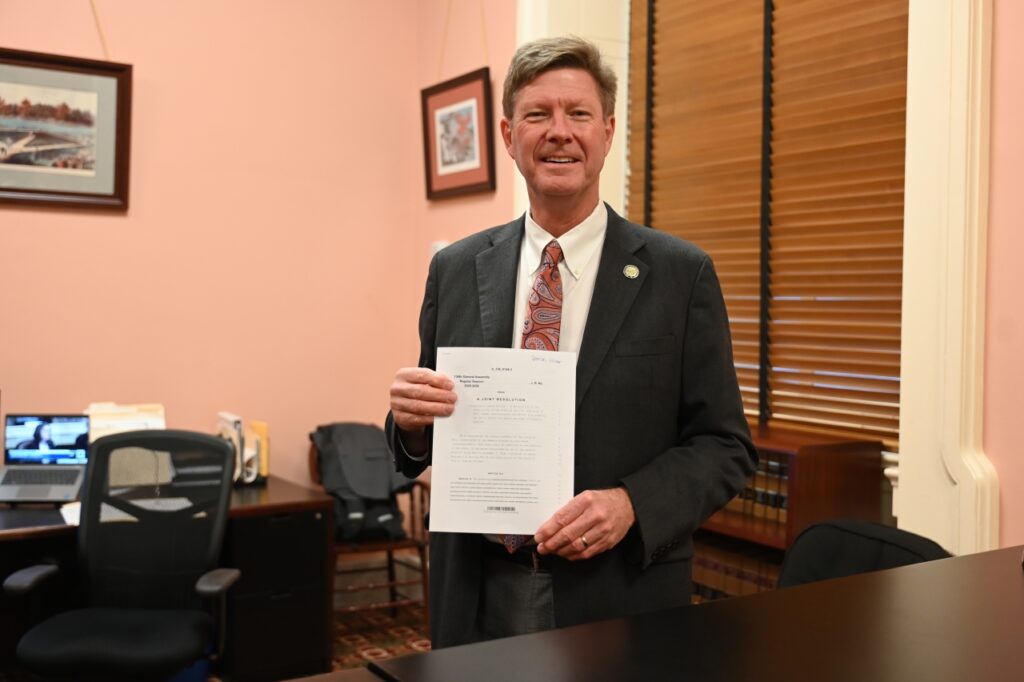
State Rep. Mark Hiner, R-Howard, introduced a resolution on Thursday that would allegedly provide more than $10 billion in property tax relief to homeowners by amending Ohio’s Constitution beginning in tax year 2027 to exempt residences currently occupied by the owner of that residence from property taxes.
“This resolution is a direct response to the constituents in my district and around the state who are having extreme difficulty paying their property taxes amid steep increases in home values,” he said in a release.
Hiner also said that abolishing all property taxes is not a good idea because it “would completely overhaul the state’s tax system and place a heavy burden on the local services people rely on every day.”
“The resolution I introduced today is targeted relief done responsibly,” he said.
According to the lawmaker, aside from the owners of the property being exempt from paying taxes, everyone else would still need to pay taxes, including residential properties that are not owner-occupied, commercial, industrial, agricultural, and public utility personal property.
If three-fifths of the members elected to both chambers of the Ohio General Assembly approve the proposal, it will be submitted to the Ohio Secretary of State, Frank LaRose, for placement on the November ballot. The measure would take effect on Jan. 1, 2027, if a majority of Ohio voters approve it.
Meanwhile, state Sen. Bill Blessing III, R-Colerain Twp., introduced another resolution that would tax the underlying land rather than the total property, including improvements such as homes and buildings.
If approved, Senate Joint Resolution 7 would apply only to local elected boards.
“Why are land value taxes superior to property taxes? Quite simply, they don’t tax development,” Blessing told an Ohio Senate committee earlier this month, the Ohio Capital Journal reported. “And as many of you know, if we’re going to tax improvements, we get fewer of them.”
Blessing also said that land value taxes bringing in more money in the aggregate is a “very likely outcome.” According to him, it would result in “lowering tax bills for the individual and reducing housing costs due to the added supply.”
He then said that lower housing costs would benefit Ohioans and local businesses because they would have greater buying power, adding that tax collection under the land value model would be “comparatively simple and straightforward,” according to the Ohio Capital Journal.
“You can’t move land, nor can you hide it,” Blessing said, claiming that many economists favor land taxes over property taxes.
Ron Moore, an economist from Ohio, who helped Blessing with his proposal, explained to The Journal that economists have been advocating for a land tax for more than a century. According to Moore, encouraging development and expanding the tax base would result in more money in people’s pockets.
“They’re more efficient (and) they’re more equitable than property taxes,” he told the Ohio Capitol Journal. “I think if we were starting from square one, this would be a much better way to do it.”