Ramaswamy: Cracking down on Medicaid fraud could save billions
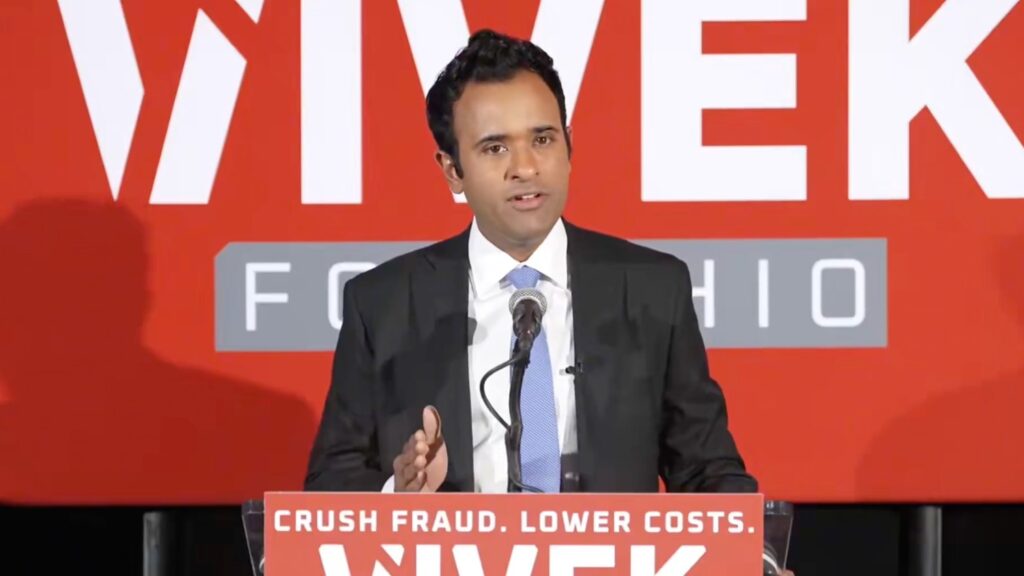
Republican gubernatorial candidate Vivek Ramaswamy announced a plan Tuesday to crack down on Medicaid waste, fraud and abuse, saying it could save taxpayers an estimated $4.7 billion by reducing Medicaid spending by 10% in fiscal 2027.
The plan, announced in Columbus amid growing concerns about Medicaid fraud in Ohio, focuses on three core reforms: aligning federal and state incentives to combat fraud, simplifying Medicaid bureaucracy and making Medicaid fraud prosecution a top statewide enforcement priority.
Medicaid covers roughly 3 million Ohioans and costs between $43 billion and $47 billion a year. The announcement follows a series of Daily Wire stories that indicated hundreds of millions of dollars in potential fraud in the state.
“Fraudsters and corrupt providers are stealing resources away from vulnerable Ohioans and driving up healthcare costs for everyone else,” Ramaswamy said in a release. “…Ohio should lead the nation in building a Medicaid system that is accountable, enforceable and focused on the people it was created to serve.”
An uncomfortable truth: over the last decade, Ohio Medicaid enrollees have increased from 2.9 million to 3 million, while Ohio’s Medicaid expenses have risen from $27 billion to $47 billion. This is insanity. pic.twitter.com/d18qpCouLN
— Vivek Ramaswamy (@VivekGRamaswamy) May 19, 2026
On Monday, Republican Gov. Mike DeWine signed an executive order allowing the Ohio Department of Medicaid to enforce emergency rules announced last week. The new rules, which were not announced during Fraud Prevention Month in April, require more frequent revalidation of providers identified as higher risk of fraud.
Ramaswamy vowed that, if elected, he would “make fighting Medicaid fraud a top priority, strengthen enforcement, simplify the bureaucracy and return the savings to Ohioans through lower healthcare costs.”
His approach starts by updating how states are incentivized to pursue Medicaid fraud.
Ramaswamy wants approval from the federal Centers for Medicare & Medicaid Services to launch a time-bound Demonstration Project that would allow the Buckeye State to keep at least $0.65 of every $1 saved through more robust fraud detection, investigation and prosecution. Currently, the state keeps less than $0.35 of every $1 saved by rooting out fraud.
The campaign pointed to Tennessee’s waiver model, which freed up $1.3 billion for healthcare, and Ramaswamy’s campaign could generate an estimated $4.7 billion in total taxpayer savings from a 10% reduction in Medicaid spending in fiscal 2027. According to the campaign, that tally includes roughly $3.1 billion to help lower healthcare costs, including via co-pay assistance and reduced insurance premiums.
Ramaswamy wants to simplify Medicaid bureaucracy to combat fraud. Roughly $47 billion in Medicaid funding is expected to flow through as many as 10 state entities by fiscal 2027, which he said not only confuses patients, providers and taxpayers, but gives bad actors an opportunity to exploit the system.
Ramaswamy’s campaign said he has already begun discussions with key federal leaders, including CMS Administrator Dr. Mehmet Oz, and that he will continue advancing the framework for a potential collaboration, with the idea that it can take effect in January 2027, shortly after inauguration.
Democratic gubernatorial candidate Amy Acton’s campaign told The Columbus Dispatch that inaction is the result of “the rampant corruption in Ohio’s statehouse, which has allowed fraud, waste, and abuse for far too long” without mentioning she is the former director of the Ohio Department of Health and was once part of the DeWine administration.
“As governor, Dr. Amy Acton will prioritize rooting out Medicaid fraud, waste, and abuse while ensuring that Ohioans can access affordable, quality healthcare,” Acton spokeswoman Addie Bullock told The Columbus Dispatch.
Related Stories

PAC ad slams Amy Acton for dodging debate with Vivek Ramaswamy
Ohio removes 75 noncitizen voter registrations in latest citizenship review