Sen. Jerry Cirino: SB 1 ‘brought important reforms to higher education to ensure intellectual diversity’
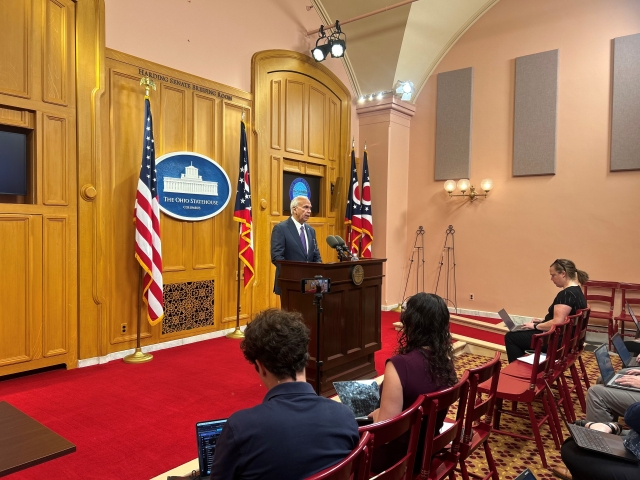
State Sen. Jerry Cirino, R-Kirtland, highlighted the success of Senate Bill 1, also known as the Advance Ohio Higher Education Act, which he sponsored, during a press conference at the Ohio Statehouse on Wednesday while also outlining future legislative plans.
“Senate Bill 1 brought important reforms to higher education to ensure intellectual diversity, eliminate structural discrimination, and more,” he said. “As we approach the one-year anniversary of the legislation, I’m proud to say we’ve seen great results so far.”
He emphasized the core goals of the bill: promoting intellectual diversity, eliminating structural discrimination, including diversity, equity, and inclusion initiatives in admissions, hiring, and student support, requiring post-tenure faculty reviews, eliminating low-enrollment programs, mandating mission statements supporting intellectual diversity, and prohibiting colleges and universities from taking positions on controversial issues.
The ACLU of Ohio, the American Historical Association, the Ohio Conference of the American Association of University Professors, and professors from various Ohio colleges and universities opposed the bill, going as far as to suggest that it would hurt the institutions of higher learning, students, and faculty, according to the press release. Cirino addressed these concerns during the press conference.
“We also heard from critics that this bill would push minorities away from attending college in our state,” he said.
Cirino refuted their predictions by citing data showing strong enrollment growth rather than the declines, using The Ohio State University, the University of Toledo, Bowling Green State University, Ohio University, and Shawnee State University as examples.
“The data shows no meaningful change following the implementation of SB1. In fact, Ohio State University and the University of Toledo actually saw an increase in minority students,” he said in response to the predictions that the number of non-white students in Ohio colleges and universities would drop after the bill became law.
Faculty members are also not going anywhere, Cirino said, reporting a 95.7% retention rate for full-time faculty in the past year, higher than previous years — 93.7% in 2022-2023.
Cirino added that SB 1 broadly restored free speech in classrooms, where self-censorship by both students and professors had previously been high due to concerns over grades, jobs, tenure, or social standing. Cirino described the social environment before the bill became law as one where “wokeness had taken over,” and discrimination in hiring was out of control.
“We did not have free speech in our classrooms. Studies have been done right here about Ohio State, about self-censorship by students. And it was extremely high. I met with and corresponded with a number of students and faculty, for that matter, that felt that they had to self-censor themselves in order to get a good grade or to keep their job, or to get tenure or to be invited to faculty cocktail parties,” he said.
Cirino also praised the civic centers established at five major universities – Cleveland State University, Ohio State, the University of Cincinnati, Miami University, and the University of Toledo – saying that the centers attracted faculty and positive attention.
Cirino acknowledged that some people working in colleges and universities are still resisting the law, especially when it comes to abolishing the DEI-related programs, but said that the institutions of higher learning were generally complying.
During the press conference, Cirino announced his support for new legislation, Senate Bill 461. The bill, also known as the Strengthening Ohio Civic Act, would grant the five civic centers the rights and privileges of independent colleges within their universities.
Under the proposal, center directors would gain sole authority over hiring, rank, salary, and tenure decisions. Tuition and revenue from center classes would remain with the centers, and colleges and universities that have these centers would be required to adequately fund them.